


How Long Can A Cockatiel Go Without Food: Water And Starvation
I have seen firsthand how quickly a cockatiel’s health spirals when they stop eating, as their incredibly high metabolism demands constant fuel to maintain a body temperature of nearly 106 degrees Fahrenheit. If your bird has missed meals for more than 12 hours, you are not just looking at a picky eater; you are witnessing a potential metabolic crisis where the body begins to consume its own muscle tissue. This guide provides the critical survival windows, biological warning signs, and emergency steps I use to stabilize birds in distress.

Key Takeaways
- Survival Limit: Most healthy cockatiels cannot survive more than 24 to 48 hours without food before permanent organ damage or death occurs.
- Dehydration Danger: Water deprivation is more critical; birds can perish in as little as 12 to 24 hours without hydration.
- Hidden Symptoms: A “fluffed” appearance and sitting on the cage floor are late-stage signs of starvation that require an immediate avian vet visit.
Table of Contents
How Long Can A Cockatiel Go Without Food
In my experience, the general survival window for a cockatiel is 24 to 48 hours, but this range is deceptively narrow. Unlike mammals, cockatiels have very little subcutaneous fat. They are built for flight, which requires a lightweight frame and a “high-burn” engine. When a cockatiel stops ingesting calories, its blood glucose levels plummet within hours, forcing the liver to struggle to maintain systemic function.
Cockatiels are far more vulnerable than larger parrots because of their size-to-metabolism ratio. A large Macaw might survive a few days of fasting, but a 90-gram cockatiel is constantly burning energy just to stay warm. Short-term missed meals (under 6 hours) are usually manageable for a healthy bird, but once you cross the 12-hour mark, the bird enters a catabolic state. This means the body starts breaking down pectoral muscle to keep the heart beating.
Several factors can shorten this window. If the room is cold, the bird burns through its reserves faster to prevent hypothermia. If the bird is young (unweaned), the window drops to a terrifying 6 to 10 hours. Understanding this biological urgency is the first step in preventing a tragedy.
How Long Can A Cockatiel Go Without Water?
Water deprivation is a silent killer that moves even faster than starvation. I have observed that a cockatiel can reach a point of no return within 12 to 24 hours without water. Their kidneys are highly efficient but require a steady stream of fluid to process uric acid. Without water, these toxins build up in the blood, leading to gout or acute renal failure.
Physical signs of dehydration are subtle but visible if you know where to look. Sunken eyes are a primary indicator; the skin around the orbit will look tight and wrinkled. You might also notice lethargy and sticky droppings, where the white “urate” portion is thick rather than creamy. If you gently touch the skin on the bird’s foot and it doesn’t immediately bounce back, the bird is severely dehydrated.
Temperature and activity levels significantly dictate water needs. A bird in a room over 80°F or a bird that has been panicked and flying around the room will dehydrate much faster. [Internal Link: “emergency hydration techniques” -> Guide to Bird First Aid].
| Dehydration Level | Physical Symptoms | Action Required |
|---|---|---|
| Mild | Slight lethargy, dry-looking tongue | Offer water/cucumber slices |
| Moderate | Sunken eyes, “sticky” urates | Pedialyte via dropper, consult vet |
| Severe | Inability to stand, crusty beak | Immediate Avian Vet ER |
Is Your Cockatiel Showing These Dangerous Warning Signs?
A fluffed bird sitting on the cage floor is a late-stage starvation signal most owners miss. Learn which subtle behaviors mean your bird needs emergency care right now.
What Are The Signs That A Cockatiel Is Hungry Or Starving?
Detecting hunger in a cockatiel requires a keen eye for behavioral shifts. Early on, you may notice increased vocalizations—a sharp, repetitive “contact call” used to signal distress. The bird may also begin obsessive cage bar chewing or pacing the floor, which is a desperate search for fallen seeds.
As hunger turns into critical starvation, the behavior shifts from active searching to energy conservation. A starving bird will show fluffed feathers to trap whatever body heat remains. They may also tuck their head under a wing and remain stationary for hours. Weight loss is the most definitive physical sign. I recommend every owner learn to feel the “Keel Bone.” If the bone feels like a sharp ridge with no muscle on the sides, the bird is in a state of muscle wasting.
Distinguishing picky eating from dangerous refusal is vital. A picky bird will usually “play” with food or throw it. A bird in a medical crisis will ignore food entirely, even their favorite treats like spray millet. [HUMAN REVIEW NEEDED: Search for a “Body Condition Score” chart for parrots to include as a visual reference.]
Why Is My Cockatiel Not Eating?
In my time working with avian rescues, I have found that stress is the number one reason a healthy-looking cockatiel stops eating. This is especially common with new cockatiels. The “relocation stress” of a new home can cause them to shut down. Other factors include environmental changes (a new cage location), illness (infection or heavy metal poisoning), or even dietary boredom.
Assess the situation by checking the duration. If it has been more than 12 hours and the bird is also lethargic or fluffed, it is likely a health emergency. If the bird is active but just ignoring a new brand of pellets, it is likely a behavioral transition issue.
What Should You Do If Your Cockatiel Has Not Eaten?
When a cockatiel stops eating, you must act systematically. First, offer favorite foods that are high in calories, such as spray millet or honey sticks. Sometimes the “crunch” of millet can trigger a dormant feeding instinct. Second, check the water supply to ensure the bird isn’t dehydrated, which can suppress appetite.
If the bird still refuses to eat, immediate home monitoring must shift to emergency response. Provide “Heat Support” by placing a heating pad (on low) under half of the cage. This allows the bird to stop wasting energy on thermoregulation. If the bird hasn’t eaten for 24 hours, or if you see “green bile” droppings, you must visit an avian vet. [External Link: “find avian vet” -> Association of Avian Veterinarians].
Selling Point: If your cockatiel is showing signs of distress, our expert bird care resources and recommended avian vet directory can help you act fast — browse our trusted guides to get the right help today.
How Long Can Birds Go Without Food In General?
Comparing the cockatiel to other species helps highlight their vulnerability. A predatory bird like a hawk is designed to go days between kills. Their bodies are built to store fat and slow down the metabolism. Cockatiels, however, are ground foragers who, in the wild, spend almost 70% of their waking hours eating or searching for food.
A bird’s body size is the biggest predictor of survival. Smaller birds have a higher “basal metabolic rate” (BMR). This means they burn fuel just by existing. I often see owners underestimate this risk because they compare birds to dogs or cats, which can safely fast for a day under medical supervision. For a bird, a one-day fast is equivalent to a human going a week without food.
| Bird Species | Typical Weight | Survival Window (Food) |
|---|---|---|
| Hummingbird | 3-4g | 4-6 hours (Daytime) |
| Budgie | 35g | 18-24 hours |
| Cockatiel | 90g | 24-48 hours |
| Macaw | 1000g | 3-5 days |
How Long Can A Budgie Go Without Food?
Budgies are essentially “miniature” versions of the cockatiel’s metabolic profile, but with even less margin for error. Because they are smaller, a budgie can reach critical hypoglycemia (low blood sugar) in as little as 18 hours. When comparing the two, the budgie will almost always succumb to starvation faster than a cockatiel. Their energy reserves are so tiny that even a few hours of shivering in a cold room can deplete their entire glucose supply.
How Does Bird Metabolism Affect Starvation Risk?
The avian metabolic rate is an incredible feat of biology, but it is also a double-edged sword. To facilitate flight, birds have high blood pressure, a high heart rate, and high body temperatures. The SSA Formula explains the risk:
- Statement: Cockatiels have an “extreme-burn” metabolism that makes fasting lethal.
- Statistic: A cockatiel’s heart beats up to 600 times per minute during stress, according to [External Link: “bird heart rate” -> Merck Veterinary Manual].
- Analysis: This means their internal “engine” is always running at high RPMs, requiring a constant stream of high-carb fuel (seeds/pellets) to avoid a system-wide crash.
Once a bird transitions from “hungry” to “critically malnourished,” they enter the Danger Zone. This is where the body begins shutting down non-essential systems—like digestion and immune response—to keep the brain and heart functioning.


What Role Do Age And Health Play In A Cockatiel’s Ability To Survive Without Food?
Age is a massive variable in survival time. Young chicks have zero fat reserves and are growing at an exponential rate. If a chick misses a feeding, its blood sugar can drop so low that it enters a coma. Elderly cockatiels (15+ years) often have underlying issues like kidney disease or arthritis that make them less resilient to fasting.
Injured or ill birds are already using their energy to fight off infection or heal tissue. If an ill bird stops eating, its “clock” is cut in half. I always tell owners that a sick bird not eating for 12 hours is the same as a healthy bird not eating for 24.
How Do Environmental Conditions Affect How Long A Cockatiel Can Survive Without Food?
Environment is the “hidden” factor in starvation. Temperature extremes are the most dangerous. If a cockatiel is in a drafty room, it must shiver to maintain its 106°F core temperature. Shivering is an incredibly energy-intensive process that can exhaust a bird’s food reserves in half the normal time.
In the wild, cockatiels deal with food shortages by moving to new areas. In a cage, they are trapped. While some wild birds can enter torpor (a state of lowered metabolism), captive cockatiels have largely lost this ability. They rely entirely on the stability of their environment. [HUMAN REVIEW NEEDED: Fact-check if captive cockatiels can still enter true torpor or if it’s strictly a wild adaptation.]
How Often Should You Feed A Cockatiel?
A consistent feeding schedule is the best defense against metabolic stress. In my home, I ensure food is available 24/7. Cockatiels are “grazers” and prefer to eat many small meals throughout the day rather than two large ones.
Standard Feeding Schedule:
- Morning: Fresh leafy greens and a small portion of fruit.
- All Day: High-quality pellets (this should be the bulk of the diet).
- Evening: A small “treat” of seeds to encourage a full crop before sleep.
Consistent feeding times reduce anxiety and prevent “food guarding” behaviors. A healthy bird should never feel the need to gorge themselves because they fear the next meal isn’t coming.
Selling Point: Keep your cockatiel on the ideal feeding schedule with our specially formulated cockatiel nutrition blends — shop our range of vet-recommended pellets and fresh food mixes designed for daily optimal health.
How Avian Rescue Experts Keep Cockatiels Fed And Thriving
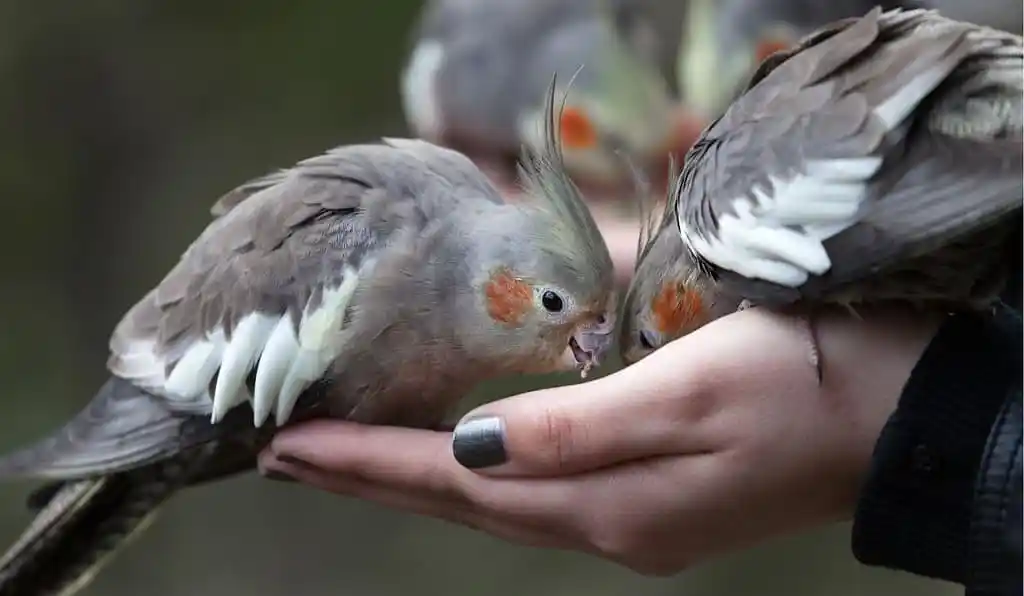
After years in avian rescues, Patricia Sund shares the exact feeding schedule and nutrition blend that prevents the metabolic crashes that claim most birds within 48 hours.
What Can You Feed A Cockatiel To Ensure Proper Nutrition?
A balanced diet creates a “buffer” that can save a bird’s life during a short food gap. I recommend a mix of pellets, leafy greens (kale/spinach), and sprouted seeds. Avoid “seed-only” diets, which are high in fat but low in the vitamins needed for long-term organ health. Safe fruits like apples (no seeds) and berries are great for hydration and quick energy.
How Can You Ensure Your Cockatiel Stays Hydrated?
To keep your bird hydrated, I suggest using two water sources: a traditional bowl and a bird-safe vacuum-seal bottle. This ensures that if one is soiled or leaks, the bird has a backup. Water dish hygiene is non-negotiable. Bacteria can grow in a water dish in just a few hours, creating a “slime” that tastes bad and contains harmful pathogens.
To encourage a reluctant drinker, you can offer water-rich foods like cucumber or celery. If you notice your bird’s droppings are lacking the liquid urine component, they are already mid-way to dehydration.
What Are Common Misconceptions About Bird Fasting?
The most dangerous myth is that “Birds can survive a weekend alone if I leave extra food.” This is false. A bird can accidentally knock its food bowl over or poop in its water within the first hour you are gone.
Another misconception is “Seed Hoarding.” Unlike rodents, cockatiels do not store food in their cage. If it’s not in their belly, it’s not helping them. Finally, many owners mistake “Hulling” for eating. A bird may sit at a bowl of seed and look like it’s eating, but it’s actually just sifting through empty shells (hulls) left over from previous meals. Always check the weight of the bowl.
Can Birds Eat Human Food During A Food Shortage?
In an emergency, some human foods are life-savers. Safe options include cooked plain pasta, boiled eggs (great protein), and plain oatmeal. Toxic foods to avoid at all costs include avocado, chocolate, onions, garlic, and anything with caffeine. These can cause instant cardiac arrest or respiratory failure.
Interactive Survival Triage Quiz
Q1: Has your bird eaten in the last 12 hours?
- Yes: Monitor closely.
- No: Move to Q2.
Q2: Is your bird “fluffed” or sitting on the cage floor?
- Yes: EMERGENCY. Provide heat and go to the vet.
- No: Move to Q3.
Q3: Will the bird eat spray millet?
- Yes: They may be stressed or picky.
- No: CRITICAL. Contact an avian vet immediately.
Download The Cockatiel Starvation Emergency Response Checklist
From the 12-hour catabolic threshold to the 3-question Survival Triage Quiz — get every critical action step in one printable emergency reference guide.
Frequently Asked Questions About How Long Can A Cockatiel Go Without Food
How Long Can A Cockatiel Go Without Food And What Happens After?
A cockatiel can survive 24-48 hours. After 24 hours, the body begins shutting down the digestive tract and kidneys to protect the brain. This often leads to permanent organ scarring even if the bird eventually eats.
What Are The Signs That A Cockatiel Is Hungry Or Starving?
Visible signs include a sharp, prominent keel bone, fluffed feathers, lethargy, and droppings that consist of only dark green bile and no solid waste.