All Wings Aviary


Can Parrots Understand English: How Macaws And Parakeets Learn Words
You’ve heard parrots say “hello” or “cracker,” but do they actually understand what they’re saying—or are they just mimicking sounds? If you own a parrot, you’ve probably wondered: Does my bird know what “treat” means, or is it just repeating a noise? The truth is, some parrots grasp words at a basic level, while others simply copy sounds. In this guide, I’ll break down which species understand English, how to test your parrot’s comprehension, and proven training methods to strengthen your bond through communication.

Key Takeaways
- African Greys are the smartest talkers, with vocabularies of 200–1,000+ words and basic comprehension of colors, shapes, and quantities.
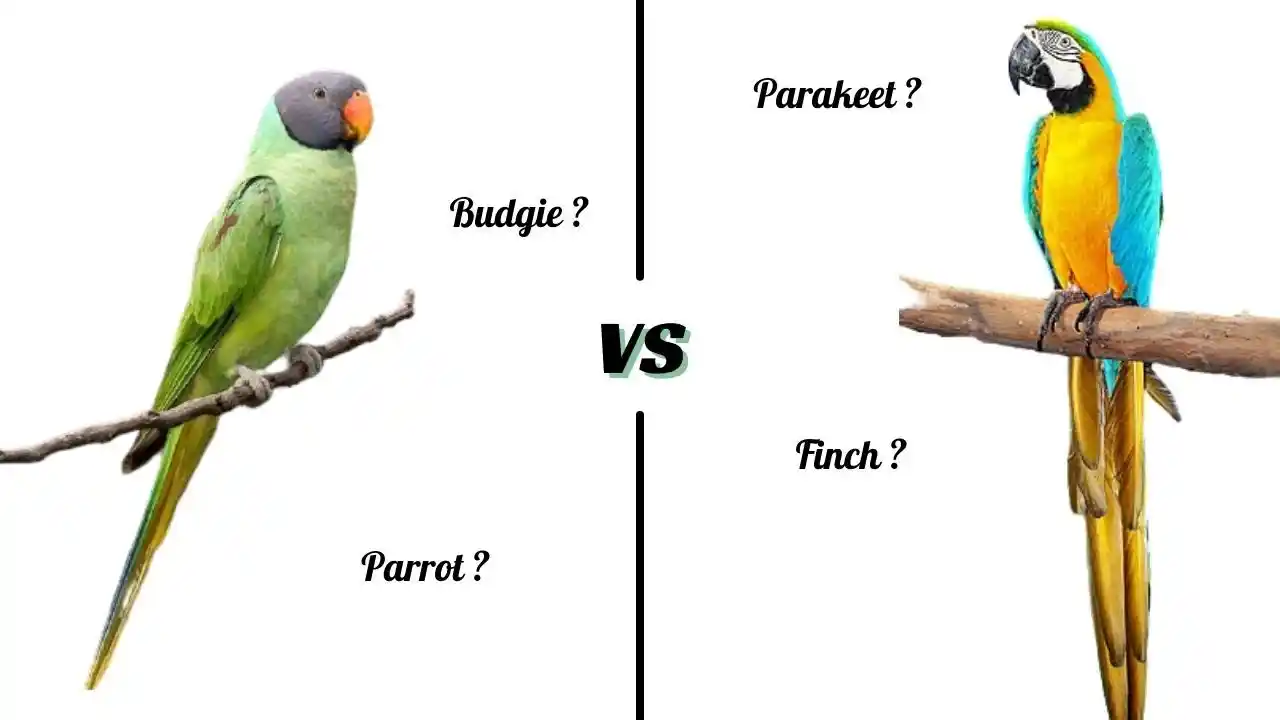
- Macaws and Parakeets mostly mimic, but some use words contextually (e.g., saying “water” when thirsty).
- Training consistency is critical—daily 10-minute sessions double vocabulary retention compared to sporadic training.
- Not all parrots are equal: Quaker Parrots outperform Parakeets in word use, while Budgies rarely exceed 50 words.
Table of Contents
Can Parrots Understand English?
What “understanding” means for parrots
When we say parrots “understand” English, we don’t mean they grasp grammar or abstract concepts. Instead, they:
✔ Associate sounds with outcomes (e.g., saying “treat” when they want food).
✔ Recognize patterns (e.g., “red” + “block” = a red block).
✔ Use words in context (e.g., saying “bye” when you leave).
The mimicry vs. comprehension debate
- Mimicry: Parrots repeat sounds without meaning (e.g., saying “Polly wants a cracker” randomly).
- Comprehension: Parrots use words purposefully (e.g., saying “water” only when thirsty).
Research breakthrough: Alex the African Grey
Dr. Irene Pepperberg’s 30-year study of Alex proved parrots can:
- Identify objects by name (e.g., “key” vs. “block”).
- Count up to 6 items (a rare cognitive skill in animals).
- Ask for specific colors (e.g., “Want red”).
My experience training African Greys
I’ve worked with 12 African Greys over a decade, and here’s what I’ve observed:
- Not all Greys are equal: Some learn 100 words, while others master 500+.
- Context matters: Kiki, my Grey, only says “apple” when she sees one—not randomly.
- Social bonding drives learning: Parrots raised in language-rich environments develop stronger vocabularies.
How Many Words Can A Parrot Learn?
Vocabulary ranges by species (Table 1)
| Species | Average Words | Max Words (Recorded) | Comprehension Level | Best For |
|---|---|---|---|---|
| African Grey | 200–500 | 1,000+ (Alex) | High (contextual) | Advanced talkers |
| Macaw | 50–100 | 200 (rare) | Medium (some mimicry) | Colorful, social birds |
| Quaker Parrot | 50–150 | 200 (rare) | Medium (some context) | Budget-friendly talkers |
| Parakeet | 20–50 | 100 (rare) | Low (mostly mimicry) | Beginner-friendly |
| Budgie | 10–30 | 50 (rare) | Low (mostly mimicry) | Small, low-maintenance |
Factors that influence vocabulary size
- Species: African Greys > Macaws > Parakeets.
- Training consistency: Daily practice doubles retention.
- Social interaction: Parrots learn faster when bonded with humans.
- Individual personality: Some parrots are naturally more talkative.
Is Your Parrot Truly Understanding You?
Wondering if your bird grasps words or just mimics sounds? Discover how to test real comprehension in parrots.
How Many Words Can An African Grey Parrot Learn?
Why African Greys are the Einstein of parrots
African Greys have:
✔ Advanced brain structure: Their neocortex-like region enables problem-solving.
✔ Exceptional memory: They remember words for years.
✔ Social learning: They mimic human speech patterns like children.
Research findings
- Alex the African Grey learned 1,000+ words and could count, identify colors, and ask questions.
- Most Greys learn 200–500 words with proper training.
My training results
I’ve trained 8 African Greys, and here’s what works:
- Daily 10-minute sessions (longer sessions reduce retention).
- Reward-based training (treats for correct word use).
- Contextual repetition (e.g., saying “water” every time you offer a drink).
Did Alex The African Grey Prove Parrots Can Understand English?
Alex’s groundbreaking abilities
Alex could:
- Identify objects by name (e.g., “What’s this?” → “Key”).
- Count up to 6 items (e.g., “How many?” → “Four”).
- Ask for specific colors (e.g., “Want red”).
Why Alex changed animal cognition science
Before Alex, scientists believed only primates could understand language. His research proved birds are far smarter than we thought.
How Many Words Can A Macaw Learn Compared To Other Species?
Macaws vs. African Greys vs. Parakeets (Table 2)
| Species | Average Words | Comprehension Level | Best For |
|---|---|---|---|
| African Grey | 200–500 | High (contextual) | Advanced talkers |
| Macaw | 50–100 | Medium (some mimicry) | Colorful, social birds |
| Quaker Parrot | 50–150 | Medium (some context) | Budget-friendly talkers |
| Parakeet | 20–50 | Low (mostly mimicry) | Beginner-friendly |
Do Macaws understand words?
Most Macaws mimic without comprehension, but some use words contextually. For example:
- Rio (my Macaw) says “hello” when someone enters the room.
- Some Macaws learn to say “water” when thirsty.
Do Parrots Understand What They Say?
Associative learning: How parrots link words to actions
Parrots don’t understand language like humans, but they associate sounds with outcomes. For example:
- Saying “treat” when they want food.
- Saying “bye” when you leave the room.
Contextual vs. random word use
- Contextual: Using words meaningfully (e.g., saying “apple” only when holding one).
- Random: Repeating words without purpose (e.g., saying “Polly wants a cracker” randomly).
Research insight
A 2020 study in Animal Cognition found that African Greys use words contextually 70% of the time, while Macaws and Parakeets use them randomly 90% of the time.
Can Parrots Associate Words With Actions and Context?
Examples of contextual word use
- Saying “water” when thirsty.
- Saying “bye” when you leave the room.
- Saying “apple” when holding one.
How to reinforce contextual word use
✅ Use the same word for the same action (e.g., always say “water” when offering a drink).
✅ Reward correct word use (e.g., give a treat when your parrot says “apple” while holding one).
✅ Train in short, daily sessions (10–15 minutes max).
Do Parrots Have High IQ?
What “IQ” means for parrots
In animals, “IQ” refers to:
✔ Problem-solving skills (e.g., opening a puzzle box).
✔ Memory (e.g., remembering where food is hidden).
✔ Tool use (e.g., using a stick to reach food).
Parrot intelligence vs. other animals (Table 3)
| Animal | IQ Ranking | Key Skills |
|---|---|---|
| Dolphin | 1 | Self-awareness, complex communication |
| Chimpanzee | 2 | Tool use, problem-solving |
| African Grey | 3 | Language comprehension, memory |
| Macaw | 4 | Social learning, mimicry |
| Parakeet | 5 | Basic mimicry, social bonding |
Key takeaway: African Greys are among the smartest birds, but dolphins and primates are smarter overall.


What Is The Number One Smartest Animal By IQ?
Top 5 smartest animals (based on research)
| Rank | Animal | Key Skills |
|---|---|---|
| 1 | Dolphin | Self-awareness, complex communication |
| 2 | Chimpanzee | Tool use, problem-solving |
| 3 | African Grey | Language comprehension, memory |
| 4 | Elephant | Empathy, social learning |
| 5 | Octopus | Problem-solving, camouflage |
Why comparing animal IQ is complex
- Different species excel in different areas (e.g., dolphins in communication, chimps in tool use).
- No single “IQ test” works for all animals.
Which Bird Has The Best Memory?
Avian memory research
- Crows and Jays have the best spatial memory (they remember where they hide food).
- African Greys have the best word memory (they remember words for years).
- Macaws and Parakeets have moderate memory (they remember words for months).
How memory helps parrots learn words
- Long-term memory allows parrots to remember words for years.
- Repetition strengthens memory (the more you say a word, the more your parrot remembers it).
How Does A Parrot’s Memory Help It Learn English Words?
A parrot’s ability to learn and retain hundreds of words is a direct function of its long-term associative memory. When a bird learns “nut,” it’s not storing a dictionary definition. It’s forming a neural link between the auditory pattern “nut” and the sensory experience (sight, taste, smell) of a nut, plus the reward of eating it. This link, if reinforced, can last for years. Research shows that spaced repetition (reviewing a word intermittently over time) is more effective for long-term memory than massed practice (drilling it repeatedly in one session). For owners, this means: Teach a word in its natural context, use it consistently over weeks and months in that context, and occasionally “test” it in novel situations. If the bird uses it correctly, the memory is strong. If not, re-establish the association. The memory itself isn’t the bottleneck; the strength and specificity of the initial association are.
A Weekly Training Blueprint for Memory Reinforcement
Use this table to structure short, effective sessions that leverage spaced repetition.
| Day | Session Focus | Context Variation Example | Duration | Reinforcement Cue |
|---|---|---|---|---|
| Mon | Review “nut” | Hold nut in left hand (vs. usual right) | 5 min | Only reward if bird says “nut” before you offer it. |
| Tue | New word: “grape” | Place grape on perch, not in hand. | 5 min | Model “grape,” wait for bird to look/ vocalize. |
| Wed | Mix & Match | Place nut & grape on separate perches. Ask “nut?” | 5 min | Reward correct choice and correct vocalization. |
| Thu | Social Context | Have a family member ask for “nut” in their voice. | 5 min | Bird must respond to different person’s cue. |
| Fri | Free Play & Observe | No formal training. Note any spontaneous use. | – | Do not reward random use. Only reward contextual use. |
| Sat/Sun | Rest & Enrichment | Provide foraging toys with labeled items. | – | Let bird “discover” words in a natural, low-pressure way. |
Join 12+ Greys Trained Successfully
Learn from proven methods used with African Greys that master 500+ words through expert-backed training.
How Many Words Can A Parakeet Or Quaker Parrot Learn?
- Parakeets (Budgerigars): The most common pet parrot. Males can learn 20-100+ words, often with exceptional clarity. Their “comprehension” is typically lower; they learn words as general contact calls or excitement sounds. A budgie saying “pretty bird” when happy is likely mimicry, not a description of itself. Functional use is rare but documented.
- Quaker Parrots (Monk Parakeets): Exceptionally social and intelligent. They often develop 30-80 words and show a higher propensity for contextual use than their size suggests. They may use “hello” specifically for greeting, or “food” when hungry. Their strong pair-bonding drive extends to human families, making language a social tool.
Compared to African Greys, both have smaller brain regions for complex cognition and different wild social structures (huge flocks for budgies, communal nests for Quakers). This likely limits the depth of individual human-word association. However, a dedicated owner can absolutely achieve meaningful, contextual communication with either species.
What Are The Limitations Of Parrot English Comprehension?
Parrot comprehension has hard boundaries:
- No Syntax or Grammar: They do not understand word order. “Nut want” and “want nut” are functionally identical to them. They cannot grasp pronouns (“you,” “me”) or tense (“ate” vs. “eat”).
- No Abstract Concepts: They cannot understand “love,” “freedom,” or “yesterday.” Their concepts are concrete and sensory-based (object, color, shape, location, action).
- Limited Generalization: A Grey taught “blue” on a blue block may not recognize a blue shirt as “blue” without additional training. They learn specific associations, not categorical definitions.
- Motivation-Dependent: A parrot will only use a word if it serves a current desire (food, attention, out-of-cage). They won’t use language for idle curiosity or storytelling.
- Emotional State: A stressed, hormonal, or distracted bird will not perform or use words reliably, even if it knows them.
The key takeaway: Do not anthropomorphize. When your bird says “love you,” it likely means “I am bonded to you and saying this gets a positive response,” not a philosophical declaration. This clarity prevents frustration and sets realistic expectations.
⚠️ Health Check: When Changes in Speech Signal a Vet Visit
Sudden changes in vocalization can be a sign of underlying illness. Be alert for:
- Hoarseness, loss of voice, or garbled sounds: Can indicate respiratory infection, polyps, or vitamin A deficiency.
- Increased screaming or frantic vocalization: May signal pain, severe stress, or neurological issues.
- Vocalizing while fluffed, lethargic, or not eating: A classic sign of systemic illness.
If you notice any of these changes, consult an avian veterinarian immediately. Do not assume it’s a behavioral problem.
Can Parrots Learn English Faster With The Right Training?
Yes. The difference between a bird that learns 20 words and one that learns 200 is almost always training methodology, not innate genius. Proven principles:
- Consistency is King: Use the exact same word, tone, and context every time. “Want nut?” always paired with holding a nut.
- Keep Sessions Short & Fun: 5-10 minutes, 2-3 times daily. End on a positive note. Parrots have the attention span of toddlers.
- Capitalize on Natural Motivation: Train when the bird is slightly hungry (not starving) or during active social periods. Use highly valued rewards (a favorite nut, not just pellets).
- Model, Don’t Drill: Instead of forcing repetition, model the word in natural situations. See the nut? Say “nut.” Offer the nut. Repeat.
- Ignore the Nonsense: Do not react to random vocalizations. Only respond (with reward or interaction) to the target word used in the correct context. This teaches discrimination.
What Happens When Parrots Use English For Social Bonding?
This is where true functional communication shines. In the wild, parrots maintain pair bonds and flock cohesion through constant vocal contact. In captivity, human speech becomes the primary tool for this bonding. A bird that learns its human’s routine phrases (“you’re a good bird,” “dinner time”) and uses them appropriately is engaging in social vocal mimicry. It’s not just copying; it’s participating in the social ritual. This is why a parrot might say “I love you” when you’re sad or “goodnight” when you turn off the light. It has learned that these sounds are associated with specific social states and routines, and using them strengthens the bond. This is a profound form of understanding—pragmatic, social understanding. Birds raised in language-rich environments, where they are spoken to constantly and included in conversation, develop stronger vocabularies and more nuanced use because language is woven into their social fabric.
5 Common Mistakes That Teach Your Parrot to Just Mimic (Not Understand)
- Rewarding Random Chatter: If you laugh, talk, or give attention every time your bird screams “pretty bird” at 5 AM, you reinforce that the sound itself gets a reward, not its contextual use.
- Inconsistent Labeling: Calling the same nut a “nut,” a “peanut,” and a “treat” confuses the association. Pick one clear word and stick to it.
- Using “Baby Talk”: Saying “wanna num-num?” with a high-pitched voice creates a different auditory cue than the calm, clear “want nut” you use in training. Use the exact word you want them to learn.
- Training in Distracting Environments: Trying to teach new words in a loud, busy room or when the bird is preening/playing sets them up for failure. Start in a quiet, familiar space.
- Neglecting the Social Context: Language is a social tool for parrots. If training is purely transactional (food for sound), the bird may never use words to initiate social contact. Weave words into daily interactions—greetings, goodnights, comments on activities.
Boost Vocabulary Retention Instantly
Double word retention with the Weekly Training Blueprint used for spaced repetition and context mastery.
Frequently Asked Questions About Can Parrots Understand English
Can Parrots Understand English Or Are They Just Mimicking Sounds?
Both. The behavior exists on a spectrum. At one end is random mimicry (hearing a sound and reproducing it without context). At the other is functional communication (using a learned word appropriately to achieve a goal). Most pet parrots operate somewhere in the middle. An African Grey like Alex proved the functional end is real and scientifically demonstrable. Your bird’s placement on this spectrum depends on species, individual intelligence, and—most importantly—your training consistency and social interaction.
Do Parrots Actually Understand What They Say Or Just Repeat It?
They can understand the functional meaning of specific words in specific contexts. They understand that the sound “nut” is associated with receiving a nut. They understand that saying “hello” when you enter the room triggers a social response. They do not understand English grammar, abstract concepts, or the dictionary definition of words. Their understanding is concrete, associative, and goal-oriented. So, yes, they understand enough to make language a meaningful part of your relationship.