Why Do Parrots Talk and What Motivates Them To Speak?
Parrots did not evolve to talk to humans. In the wild parrots are extremely social flock animals. Every flock develops its own unique dialect. A parrot that cannot reproduce the dialect will be rejected from the flock.
When a parrot lives in your home, they see you as their flock. They mimic your speech for exactly the same reason: to bond and be accepted as part of the group. This is the single most important thing almost everyone misunderstands about parrot speech.
How Smart Are Parrots and What Does Their Intelligence Reveal?
Parrots are broadly accepted to have general cognitive ability approximately equivalent to that of a 3 to 4 year old human child. They outperform most primates on certain types of reasoning tests, and are one of a very small number of animals that can pass the mirror self recognition test.
What Makes African Grey Parrots the Most Intelligent Talking Birds?
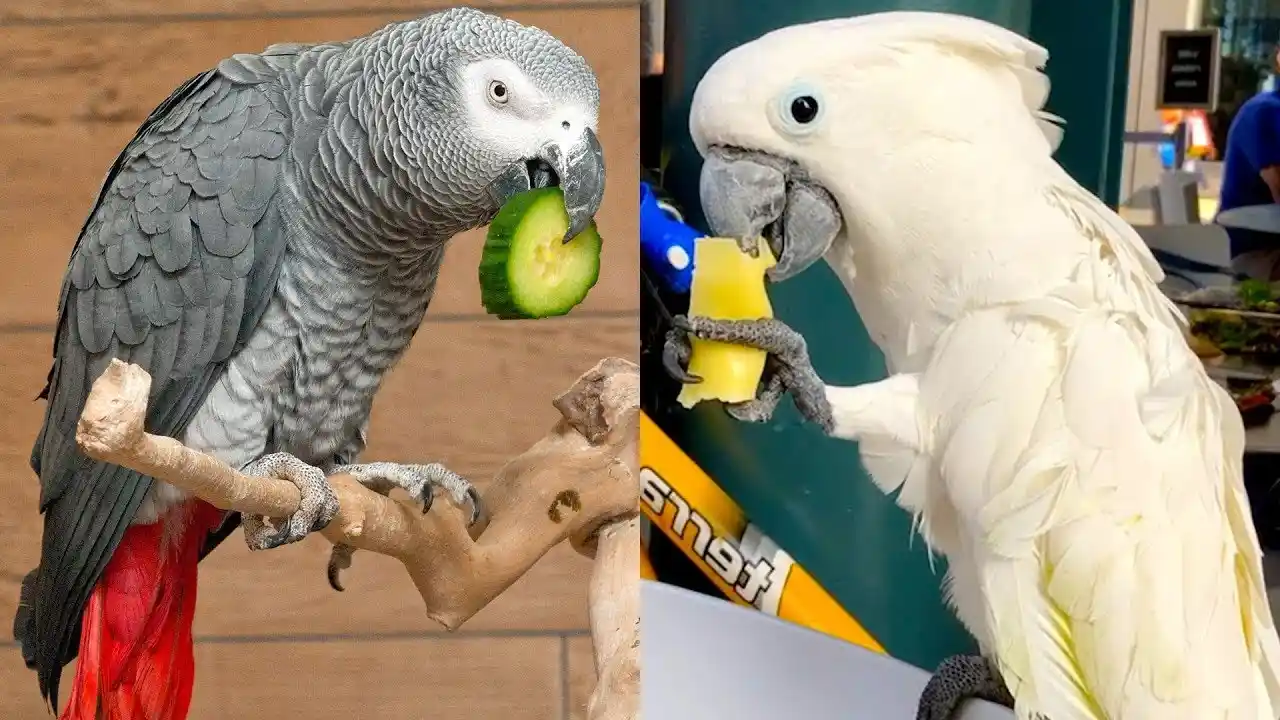
African Grey parrots are not just slightly better at talking than other parrots. They are in an entirely different league. Every single major study has found that African Greys consistently outperform all other parrot species by a very wide margin. We do not currently know why this is the case.
What Birds Can Talk and Repeat Words Besides Parrots?
The best talking birds outside of parrots are hill mynahs, common ravens, crows and starlings. Hill mynahs have clearer pronunciation than even African Greys. There is however almost no evidence that any of these species use words in context the way parrots do.
How Parrots Learn Words Through Associative and Social Learning
Parrots learn words almost entirely through social interaction. They will almost never learn words from television or recordings. The single biggest predictor of how many words a parrot will learn is how much you talk to them like you would talk to another person.
Do Parrots Understand Context When They Use Words?
This is the core question at the heart of the entire debate. Parrots will reliably say hello when you come home. They will say goodbye when you leave. They will ask for specific foods when they are hungry. They will swear at people they do not like.
Critics argue this is just very advanced associative learning. Supporters argue that at a certain point there is no meaningful functional difference between this and the understanding of a small human child. There is currently no test that can definitively prove one position or the other.
What Is a Stochastic Parrot and How Does It Relate to AI Language Models?
In 2021 a group of AI researchers published one of the most influential papers in the history of AI, titled On The Dangers Of Stochastic Parrots. The paper argued that large language models like GPT are exactly the same as parrots: they learn to produce statistically likely sequences of words, without any actual understanding of what those words mean.
This paper reignited the entire 50 year old debate about parrot cognition. Today researchers are actively using the same arguments and the same tests to evaluate both parrots and large language models.
Branching Quiz: Does My Parrot Understand What They Are Saying?
Answer these three simple questions to find out:
- Does your parrot ever say a specific word only in one specific situation, and never at any other time?
- Yes -> Go to question 2
- No -> Your parrot is almost certainly just mimicking at this stage
- Will your parrot correctly respond to a request spoken in a completely flat, neutral tone with no body language?
- Yes -> Go to question 3
- No -> Your parrot mostly understands tone, not words
- Has your parrot ever combined two words they know in a new way they have never heard you use?
- Yes -> There is a very high probability your parrot has genuine contextual understanding
- No -> Your parrot has good mimicry ability but no demonstrated understanding