All Wings Aviary


How Do Parrots Mimic Talking Learn Understand Memory And Intelligence
If you are frustrated because your pet parrot screams instead of talking, you are not alone. I see many bird owners struggle to unlock their pets’ speech potential because they treat them like humans instead of birds. The secret to avian speech lies in combining physical anatomy with intense social intelligence. I designed this guide to decode how your bird processes sounds, stores memories, and replicates human words. You will get scientific facts, anatomical comparisons, and training scripts to help your bird communicate naturally.

Key Takeaways
- Physical anatomy dictates sound as birds use a syrinx instead of vocal cords to produce human words.
- Social bonding drives mimicry because your bird views your family as its flock and wants to join the conversation.
- Cognitive associations exist as research shows some parrots connect specific words with physical objects.
- Structured auditory training using positive reinforcement yields much better results than passive background noise.
Table of Contents
How Do Parrots Mimic
I find that most people assume birds use vocal cords to talk just like humans. In my experience studying avian biology, the mechanics are entirely different. Birds possess a specialized vocal organ called the syrinx, which sits at the base of their windpipe. This organ is split into two passages, allowing air to vibrate membranes from the lungs to produce noise.
By contracting surrounding muscles, your bird can alter the pitch and volume of the sound instantly. Parrots modify these raw sounds by using their thick, muscular tongues. They shift the air inside their beaks to replicate consonant sounds like “P” and “B” without using lips.
The neurological side of mimicry is just as fascinating. Brain studies reveal that parrots have a distinct shell-like structure around their vocal centers. This neural architecture allows them to process complex auditory inputs that other birds cannot. It is why a parrot can copy a mechanical microwave beep just as easily as it copies your voice.
Table 1: Anatomical Comparison of Human vs. Avian Speech
| Feature | Human Vocal System | Avian Vocal System | Training Impact |
|---|---|---|---|
| Primary Sound Source | Larynx (Throat) | Syrinx (Chest cavity) | Birds do not require lips to talk |
| Air Control | Single airway passage | Dual airway passages | Birds can make two sounds at once |
| Sound Modification | Teeth, lips, vocal cords | Muscular tongue, beak, trachea | Tone changes based on neck posture |
How Do Parrots Talk
I recommend viewing the learning process of a parrot much like that of a human toddler. It begins with active auditory mapping. Your bird actively listens to your household sounds before ever attempting to replicate them. It takes weeks of listening before the brain can map the motor movements required to make the sound.
Repetition serves as the foundation for this neural mapping. When you repeat a word consistently, the neural pathways in the avian brain become hardwired. I always advise owners to pair words with physical actions to speed up this process. When your bird sees an apple and hears the word “apple,” the brain forms a dual sensory bond.
Social interaction is the ultimate catalyst for speech. Parrots are flock animals that survive in the wild by mirroring the sounds of their group. If your home is their flock, your bird will attempt your language to avoid isolation.
Why Does Your Parrot Scream Instead of Talking?
Overcome frustration by decoding syrinx anatomy and social bonding secrets. Transform screams into clear speech with proven avian training methods.
Why Do Parrots Mimic Human Speech
I notice that wild parrots never use human speech because they do not have a human flock to impress. In a domestic setting, your bird mimics you to secure a social bond. It is a survival mechanism. If the bird can speak your dialect, it feels secure within your family unit.
Attention seeking also drives vocal mimicry. Parrots are highly observant creatures. They quickly realize that speaking certain words gets a fast reaction from humans. If your bird says “hello” and you walk over to the cage, the behavior is reinforced. It becomes a game that provides mental stimulation.
Evolutionarily, matching flock sounds ensures safety and prevents rejection by peers. For domestic pets, mimicry acts as a crucial form of mental enrichment. Keeping your bird’s mind active prevents psychological distress and destructive behaviors.
Can Parrots Talk And Learn Words
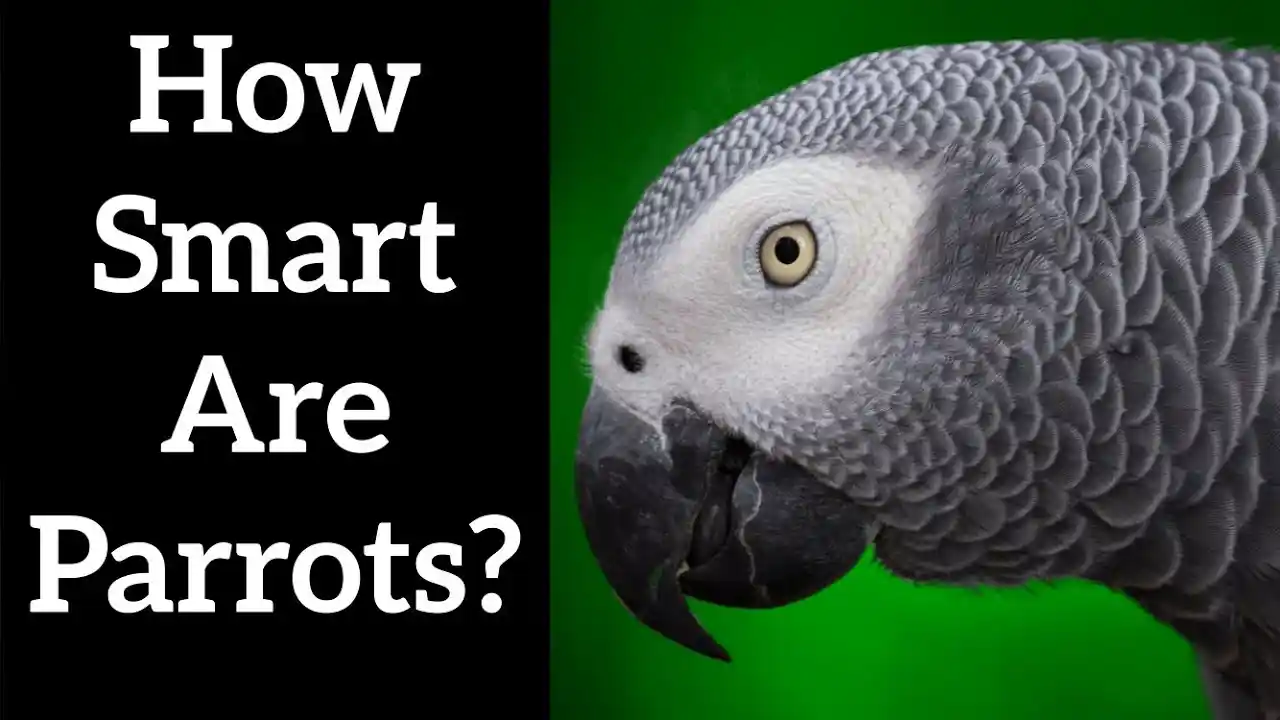
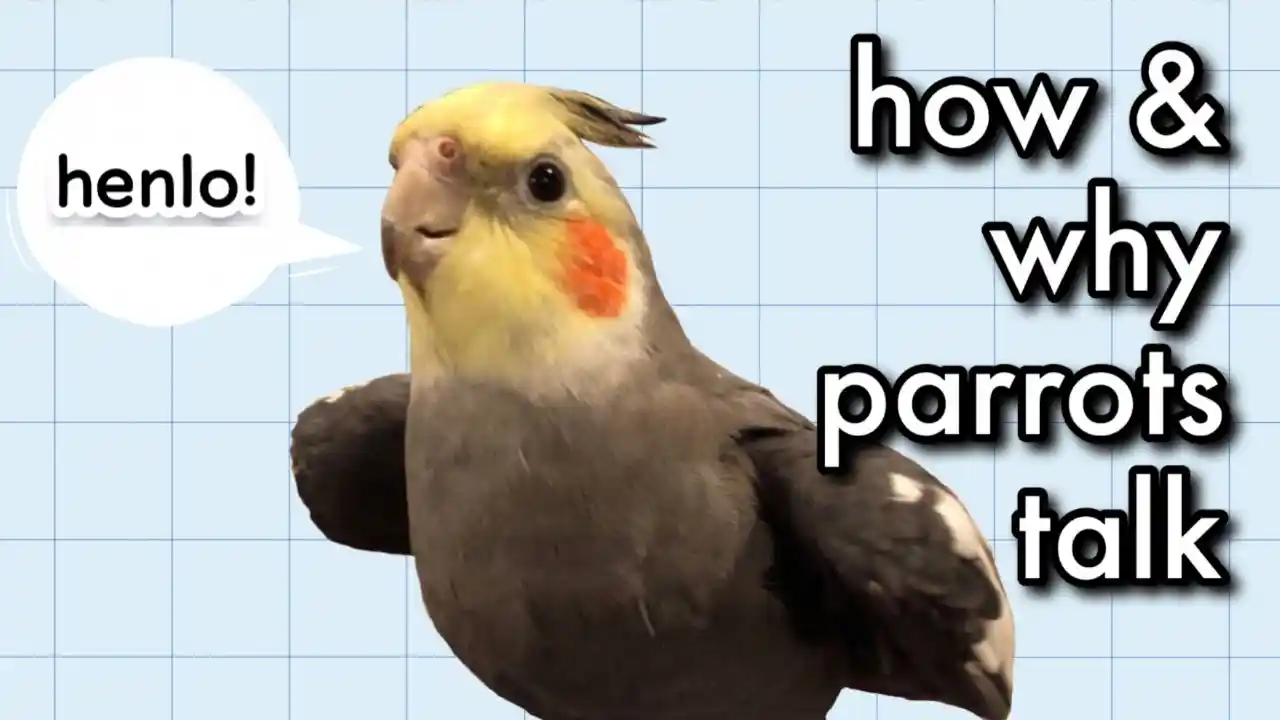
Not every bird has the disposition to speak human words. While almost all parrots have the physical syrinx required for speech, species genetics dictate natural talent. Cockatiels usually excel at whistling melodies rather than speaking words. Conversely, African Grey parrots can learn hundreds of distinct vocabulary terms.
Age plays a massive role in neuroplasticity. Younger birds absorb sounds rapidly because their brains are actively developing. Older birds can still learn, but it requires much more patience and daily repetition from the owner. Personality also dictates verbal output. Just like humans, some birds are naturally quiet while others are vocal extroverts. You must accept your bird’s baseline personality during training.
Table 2: Age-Based Speech Expectations for Parrots
| Bird Age | Developmental Stage | Expected Vocal Behavior | Recommended Training |
|---|---|---|---|
| 2 to 6 Months | Infancy | Babbling, practice noises | Simple, soft 1-word repetitions |
| 6 to 12 Months | Adolescence | First clear words emerging | Pairing words with food or toys |
| 1 to 5 Years | Adulthood | Complex phrases and sentence construction | Interactive contextual games |
| 5+ Years | Mature Adult | Stable vocabulary, slower new acquisition | Maintenance of learned phrases |
Do Talking Parrots Understand What They Say
I am often asked if birds actually know what they are saying or if they are just mindless recorders. The scientific consensus is that advanced parrot species do understand contextual meanings. In the famous studies conducted by Dr. Irene Pepperberg, an African Grey named Alex proved that birds could comprehend abstract concepts.
Alex did not just repeat words. He could categorize objects by color, shape, and material. He used language to answer questions accurately. Most pets engage in associative learning rather than complex abstract thought. Your bird knows that saying “goodnight” means the cage cover is going on, even if it does not understand the concept of time.
To achieve understanding, I recommend using the Model-Rival Technique. In this setup, two humans demonstrate a word to the bird. One human asks a question, the second human answers correctly, and then receives a reward. The bird watches this interaction and learns that accurate speech yields physical rewards.
Interactive Quiz: Discover Your Parrot’s Communication Style
Take this quick quiz to understand how your bird uses memory and speech.
Question 1: How does your bird react when you enter the room?
- A) It makes random screeching noises.
- B) It whistles a specific melody it heard on television.
- C) It says a specific greeting like “Hello!”
Question 2: How does your bird react when it wants a treat?
- C) It calls out the specific name of the treat (e.g., “Nut!”).
- B) It clicks its beak and bobs its head.
- A) It throws its toys around.
Answer Key:
- Mostly A’s: Your bird is using emotional vocalizations. Focus on basic bonding before speech training.
- Mostly B’s: Your bird is an acoustic mimic. It loves music and environmental sounds.
- Mostly C’s: Your bird is a contextual speaker. It understands associative language.
Vocal Apparatus And How It Affects Mimicry
Because your bird lacks vocal cords, its syrinx must do heavy anatomical lifting. This organ sits deep in the chest cavity where the windpipe divides. It contains delicate membranes that vibrate as air passes over them. Because there are two passages, a parrot can produce two distinct tones simultaneously.
The length of the trachea also dictates vocal acoustics. If your bird extends its neck, the sound frequency changes. By shifting the tongue, the bird manipulates air pressure inside the beak. To encourage clear speech, I recommend using high-pitched, energetic tones. Birds find enthusiastic human speech much easier to map and replicate than deep, monotone speech.
Brain Structure And Intelligence Of Parrots
The intelligence of a parrot is often compared to that of a primate. This high cognitive function is housed in a brain region known as the hyperpallium. In parrots, this area is highly dense with neurons. It allows for advanced problem-solving, long-term memory, and tool usage.
Neurological studies show that parrots have a dedicated pathway that bridges the motor centers of the brain with the auditory centers. This is why many parrots can synchronize their physical movements to a musical beat. It takes massive computing power for a brain to process sound and translate it into a physical dance.
Species with a larger hyperpallium naturally demonstrate superior talking abilities. Their brains process the auditory input faster and store the motor patterns needed to duplicate it. I always tell owners that a parrot is not a tape recorder. It is a live processor that chooses what to repeat based on social calculations.
Social Mimicry And Flock Communication
In wild habitats, parrots use mimicry to unify their flock. Wild flocks develop local dialects. A bird from one side of a forest might sound completely different than a bird from the other side. Matching dialects ensures that outsiders cannot infiltrate the social group.
Mates will often develop a private duet. They synchronize their calls so perfectly that they can find each other inside dense jungle canopies. In your home, your bird attempts to sync its calls with you. When your bird mimics your laughter or your whistle, it is treating you as its trusted partner.
Understanding this natural urge helps domestic owners prevent screaming. If your bird is screeching from another room, it is making a contact call. If you answer back with a calm whistle, the bird feels secure and stops screaming.
Table 3: Wild Flock Behaviors vs Domestic Pet Equivalents
| Wild Parrot Behavior | Domestic Pet Equivalent | Owner Action Required |
|---|---|---|
| Territorial threat call | Screaming at the vacuum cleaner | Desensitize bird to household objects |
| Contact call to locate flock | Screaming when you leave the room | Answer back with a calm, soft phrase |
| Private duet with a mate | Mimicking your laugh or catchphrase | Respond with praise and affection |


Memory And Learning Skills Of Parrots
Parrots possess incredible auditory memory systems. They can store complex acoustic patterns in their brains for decades. This retention is linked to synaptic plasticity within the avian hippocampus. When your bird learns a new phrase, its brain physically alters to store that memory.
Consistent daily practice keeps these memories active. If you stop using a phrase, the bird might let it fade into the background. However, the neural pathway remains intact. If the bird hears that phrase again years later, it can recall it instantly. Keeping sessions short, about fifteen minutes a day, yields the best cognitive results.
Opportunistic Behavior And Environmental Influence
Parrots are opportunistic learners that copy the sounds that yield the biggest reactions. This is why many pet birds learn to copy smoke detectors, microwave beeps, and barking dogs. These sounds are loud, startling, and cause humans to run around the house. To a bird, this is the ultimate entertainment.
Mistakes in copying show active intelligence. If a bird combines the word “good” and “apple” to create “goodapple,” it is testing syntax. It proves that the bird is not just passively playing a recording, but actively manipulating language parameters.
In wild settings, some birds will copy predator calls to scare competitors away from a food source. In your home, your bird might copy the sound of a text alert. It knows that when that sound happens, you look at your phone. If it wants your eyes on its cage, it will replicate that exact digital beep.
How Long Can Parrots Remember Mimicked Sounds
Avian memory retention lasts for the bird’s entire lifespan. Since some species can live for over sixty years, their internal hard drives can store thousands of sounds. Reinforcement dictates whether a sound remains active or falls dormant.
Early developmental memories are incredibly stable. Sounds learned during the bird’s first year of life become a permanent part of its core vocabulary. Even if the bird is separated from its owner for years, it will often greet them using the specific phrases learned in youth. This deep memory storage is a testament to the evolutionary importance of social group sounds.
Join Owners Training Parrots Like Dr. Pepperberg's Alex
Leverage research-proven Model-Rival Technique and flock mimicry insights. Thousands of owners succeed with structured positive reinforcement for contextual understanding.
Which Parrots Are The Best Talkers
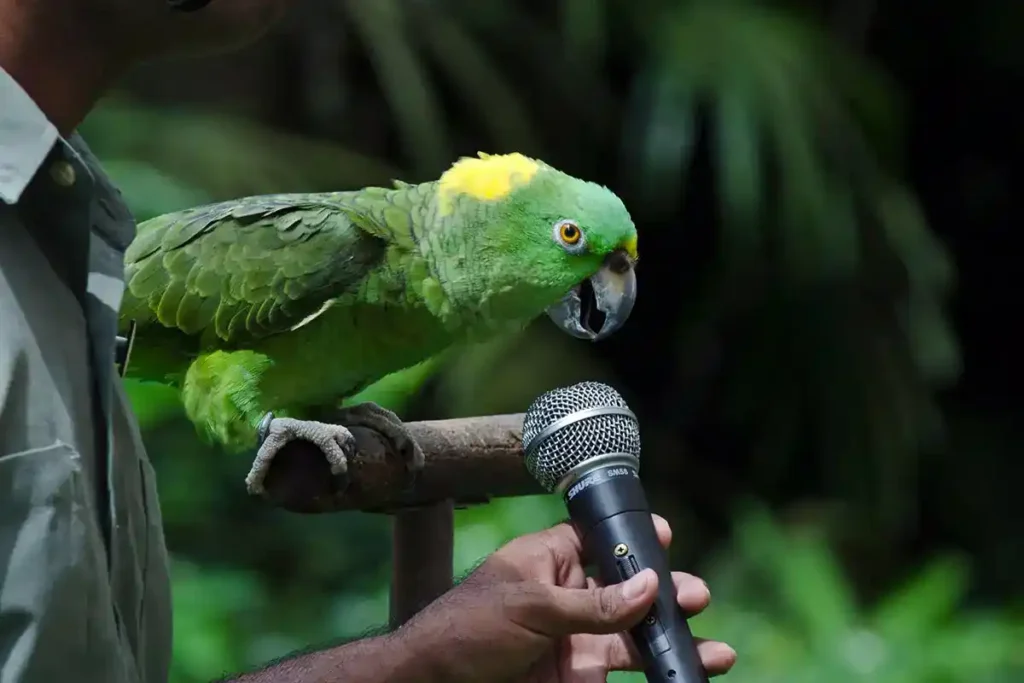
When ranking the best verbal communicators, the African Grey parrot consistently takes the crown. Their clarity of pronunciation and grasp of context are unmatched in the animal kingdom. Amazon parrots rank second, known for their loud, theatrical voices and singing abilities.
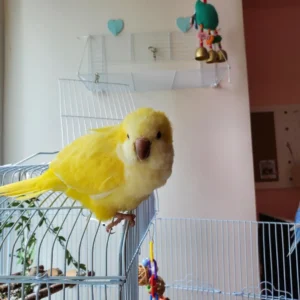
Budgerigars are surprisingly talented talkers. A budgie currently holds the record for the largest avian vocabulary ever recorded. The trade-off is that their voices are very fast and high-pitched, which can make them difficult for human ears to decipher. Cockatoos and Macaws can learn words, but their large beaks make pronunciation difficult. They often prefer physical displays, like wing flapping and dancing, over complex human speech.
Training and socialization ultimately override genetic species limits. Even an African Grey will remain silent if it is kept in isolation without active social stimulation. Conversely, a quiet species can become a chatterbox if it receives hours of daily interaction.
Table 4: Vocabulary and Vocal Profile of Common Parrot Species
| Species Type | Estimated Words | Vocal Clarity | Personality Profile |
|---|---|---|---|
| African Grey | 500 to 1,000+ | Crystal Clear | Intellectual, analytical, quiet |
| Amazon Parrot | 100 to 300 | Very Loud | Outgoing, loves singing, theatrical |
| Budgie (Parakeet) | 50 to 100 | Fast & High-Pitched | Busy, active, chattering |
| Cockatoo | 10 to 30 | Muffled | Emotionally intense, cuddly, loud |
How Do You Say I Love You In Bird Language
You do not need human words to express deep affection to your parrot. I suggest reading your bird’s body language to understand its emotional state. When a bird gently preens your hair or face, it is performing social grooming. This is the ultimate sign of flock acceptance.
Eye pinning is another indicator of emotional arousal. This occurs when the dark pupil of the bird’s eye rapidly contracts and dilates. If your bird pins its eyes while sitting calmly on your shoulder, it is experiencing joy and contentment.
If you want to teach affectionate words, synchronize them with these happy moments. When your bird cuddles up against your neck, whisper affectionate phrases softly. The bird will map the warm emotional state to the acoustic sound of the phrase.
Here are three rules I use to build a positive vocal bond:
- Use happy, high tones during cuddle sessions to reinforce positive associations.
- Ignore unwanted screeching completely, as any reaction teaches the bird that screeching works.
- Reward correct words immediately with a high-value treat like a sunflower seed.
Claim Your Free Parrot Training Scripts Guide
Get anatomical comparisons, memory exercises, and 15-minute daily sessions from this comprehensive avian speech guide designed for natural communication.
Frequently Asked Questions About How Do Parrots Mimic
How Do Parrots Mimic Words And Phrases?
Parrots mimic words by passing air through an internal organ called the syrinx. This chest organ vibrates to create raw acoustic sounds. The bird then uses its thick, muscular tongue and beak movements to shape that raw sound into human vowels and consonants.
What Is The Process For Parrots To Talk Like Humans?
The process requires active listening, neurological mapping, and positive social reinforcement. The bird listens to your household sounds and calculates which sounds get your attention. It uses trial-and-error motor movements to match your voice. When you reward the bird with treats, the sound is locked into its permanent long-term memory banks.