All Wings Aviary



Male Vs Female Cockatiel: Appearance Behavior And Better Pet Compared
Telling a male from a female cockatiel is not always straightforward, especially before the first molt or in color mutations like pearls. I have put together everything you need to know: how to read feather markings and facial color, what pearl mutation molt behavior reveals about sex, how males and females actually differ in daily behavior, and what health risks each sex carries. By the end, you will know exactly what you are looking at and what to expect.

Key Takeaways
- Tail feather barring is the most reliable home visual test: females keep it, mature males lose it
- Male pearl cockatiels molt out their markings; females keep pearl patterning permanently because the gene is sex-linked
- DNA testing is the only reliable method for lutino, albino, and whiteface mutations where visual cues fail
- Egg-binding is a veterinary emergency in females; knowing the warning signs early can save your bird’s life
- Socialization and handling from a young age shape personality more than sex does
Table of Contents
Male Vs Female Cockatiel
Understanding whether your cockatiel is male or female gives you the context to interpret everything your bird does. A male whistling for hours is not misbehaving. A female sitting puffed at the bottom of her cage may be in a medical emergency. Sex shapes behavior, health risks, and what care your bird actually needs.
This article covers visual identification, pearl mutation behavior, temperament differences, vocalization, sex-specific care, and when to use DNA testing instead of guessing. One point I want to be clear about upfront: both sexes make excellent pets. What I have consistently observed, and what experienced aviculturists agree on, is that a bird’s personality reflects how it was raised far more than its biology. Sex sets tendencies. Experience and handling determine outcomes.
What Does A Female Cockatiel Look Like Compared To A Male?
Before the first adult molt, which typically happens between six and twelve months of age, males and females look nearly identical. Trying to sex a bird younger than this by appearance alone almost always leads to the wrong conclusion.
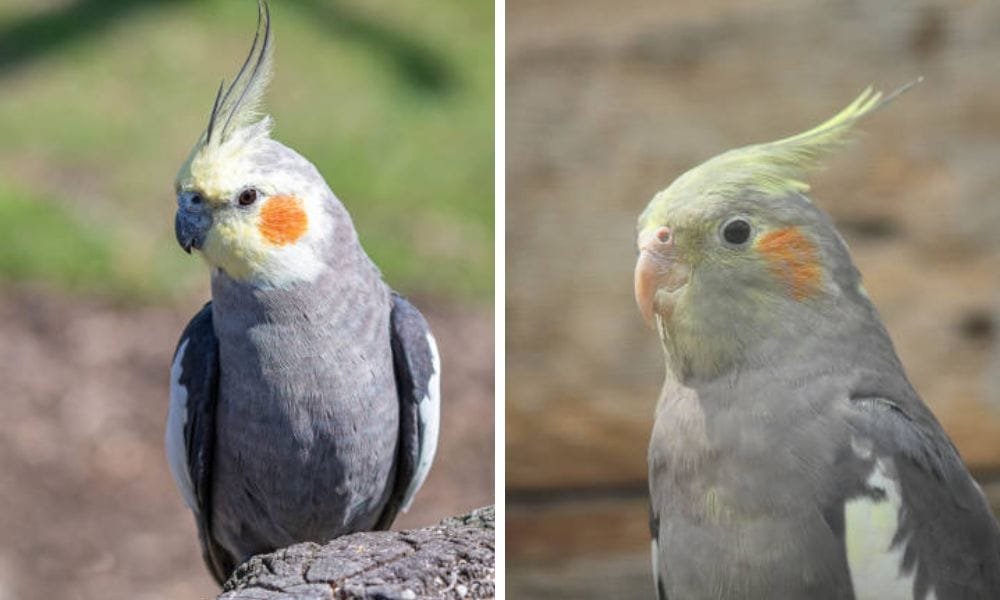
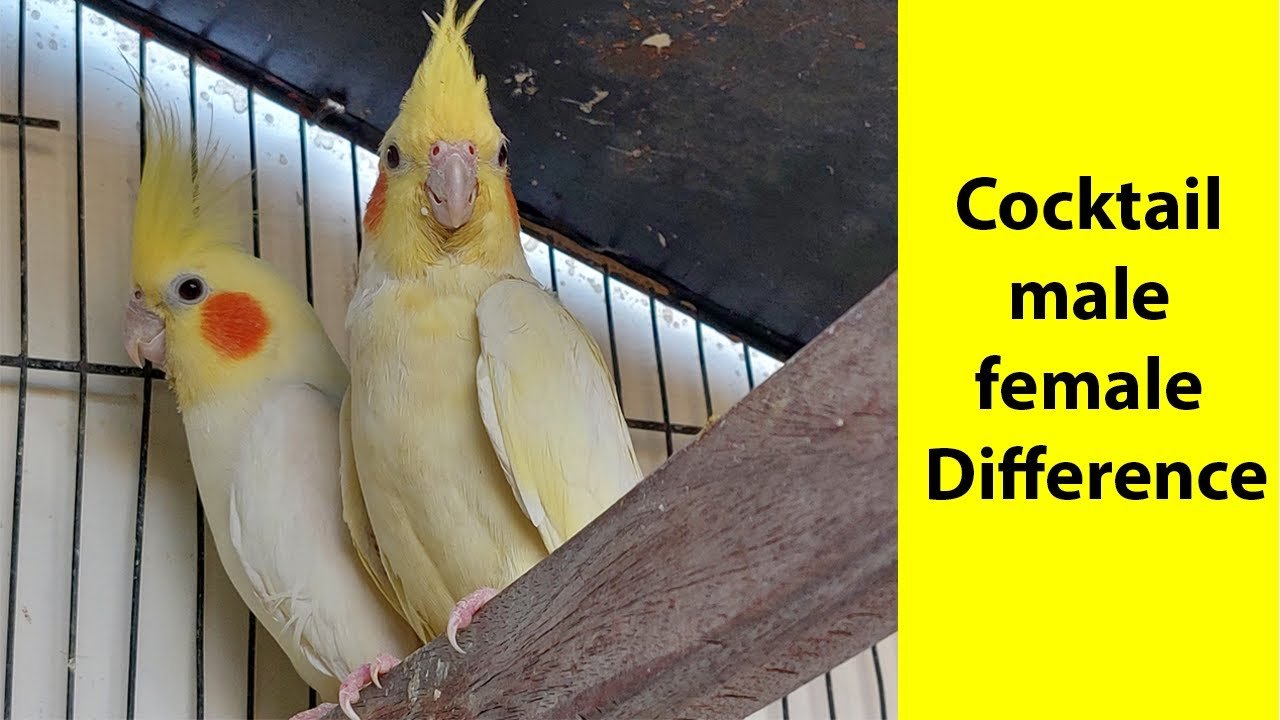
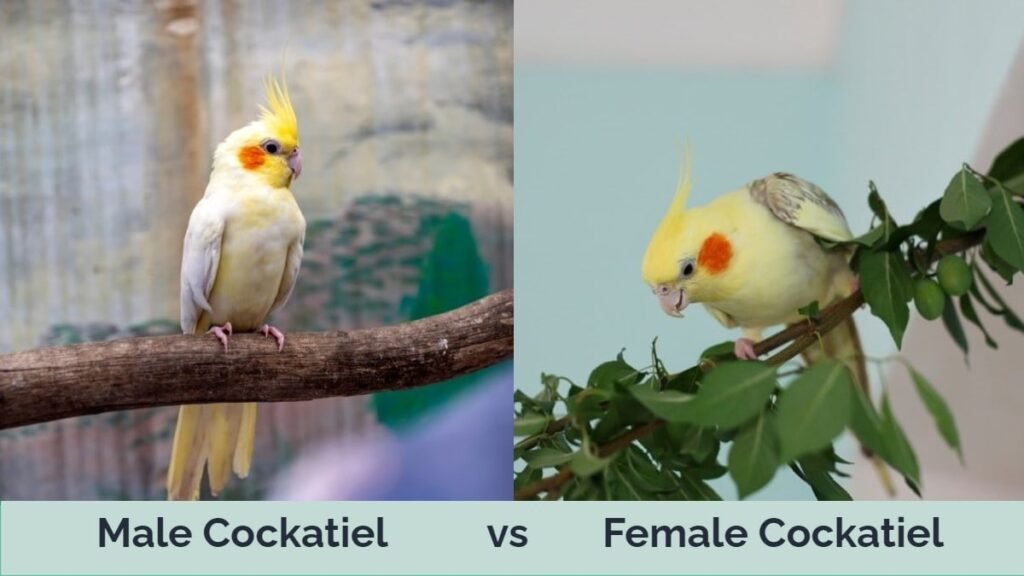
After that molt, the difference in normal grey cockatiels becomes clear. Adult males develop a vivid, clean yellow face and a deeply saturated orange cheek patch. The contrast between the yellow head and grey body is sharp enough that most owners notice it immediately. Female cockatiels retain a softer, muted appearance: a pale yellow wash rather than solid yellow, softer orange cheek patches, and a body plumage that can carry a faint brownish undertone.
This visual difference is called sexual dimorphism. In normal grey birds, holding a mature male and female side by side makes the difference obvious, even to a first-time owner.
| Feature | Male Cockatiel | Female Cockatiel |
|---|---|---|
| Face Color | Bright, vivid yellow | Pale yellow or grey-yellow wash |
| Cheek Patches | Deep, saturated orange | Soft, muted orange |
| Body Plumage | High-contrast clean grey | Slightly duller, possible brownish tint |
| When Visible | After first adult molt (6-12 months) | Retained throughout life |
Is Your Cockatiel Actually The Wrong Sex?
Misidentifying your bird’s sex leads to missed health warnings and unexpected egg-laying emergencies. Get clarity before it becomes a crisis.
How To Tell Male From Female Cockatiel Using Visual Cues
The most reliable visual method for sexing a normal grey cockatiel at home is checking the underside of the tail feathers. Female cockatiels retain a barring pattern throughout their lives: alternating light and dark horizontal bands across the underside of each tail feather. When you gently fan the tail under good lighting, this banding is clear and consistent.
Mature male cockatiels lose this barring after their first adult molt. Their tail feathers become a solid, uniform grey underneath with no banding. This change is permanent.
Home Visual Sexing Checklist:
- Wait until the bird is at least 8 to 12 months old and has completed its first molt
- Hold the bird gently and fan the tail feathers under bright light
- Check the underside of the tail for alternating light and dark bands
- Barring present: almost certainly female
- No barring on a mature bird: strongly suggests male
- Check facial color: vivid yellow face with bright orange cheek patches indicates male
- Pale yellow face with soft cheek patches indicates female
- For mutations (lutino, albino, whiteface): skip visual checks and go straight to DNA testing
How Do Pearl Cockatiel Male And Female Differences Appear?
The pearl mutation produces intricate lace-like scalloping across the back and wing feathers. It is also the mutation that confuses owners most when it comes to sex identification, because males and females behave completely differently after maturity.
The reason comes down to genetics. The pearl mutation is sex-linked recessive, carried on the sex chromosome. Because of how sex-linked genes express in birds, male cockatiels that carry the pearl gene suppress its visible expression after their first adult molt. The scalloped markings fade and are replaced by standard grey plumage, often with the bright yellow face of a mature male. A male pearl that has completed his first molt can look nearly identical to a normal grey male.
Female pearl cockatiels retain their pearl markings permanently. The scalloped patterning remains visible throughout their entire lives.
The practical rule is simple: a pearl cockatiel still showing full markings in adulthood is female. A pearl that has lost its markings after maturity is male. If a bird is mid-molt and unclear, DNA testing resolves it immediately.
What Is The Difference Between Male And Female Cockatiel Behavior?
Behavioral differences between the sexes are real, consistent, and documented across decades of aviculture observation. Think of them as reliable tendencies rather than guarantees.
Males are naturally more extroverted. In a home environment, a male claims the highest perch, starts vocalizing at sunrise, and actively displays to his reflection, a window, or his favorite person. Many owners I have spoken with describe their males as having a performative quality: they seem aware of when they have an audience and respond to it.
Females direct their energy differently. Rather than performing, a female explores. She investigates objects, seeks dark enclosed spaces that simulate nesting cavities, and engages in rhythmic surface tapping. During hormonal cycles, she becomes more self-contained and focused on her chosen corner of the cage.
Female cockatiels can also lay eggs without a male present. This surprises many first-time owners. It is a normal biological response triggered by long daylight hours, access to a dark hiding space, or even a close bond with an owner that the bird interprets as a mate relationship.
Looking for the perfect cockatiel companion? Browse our hand-raised male and female cockatiels and find your ideal feathered match. Contact us today to reserve yours.
Are Male Or Female Cockatiels More Affectionate?
Males are commonly perceived as more affectionate, and in most home settings, this holds up. A socialized male often seeks head scratches, leans into contact, and follows his owner from room to room. His affection tends to be active and initiated by him.
Female cockatiels express affection differently rather than less deeply. A well-bonded female may prefer sitting close without demanding touch, showing trust through calm, relaxed body language. The bond is genuine; the expression is quieter.
But here is the thing: handling history matters more than sex. A male not socialized regularly will not automatically be cuddly. A female raised from a young age with daily gentle handling can be as contact-seeking as any male. Sex sets the tendency. Trust and experience determine the result.
Are Female Cockatiels Calmer Than Males?
At baseline, yes. A male cockatiel in full voice is a committed vocalist. He may whistle the same tune repeatedly, respond to every household sound, and actively try to out-sing the television. Females produce contact calls, soft chirps, and occasional chattering, but rarely develop the sustained musical patterns males are known for.
For owners in apartments or quieter homes, this difference genuinely matters. A female’s lower vocal output is not a lack of personality. It is a different expression of it.
That said, “calm” describes a female’s baseline temperament, not her behavior during hormonal phases. When a female is actively laying eggs or experiencing elevated reproductive hormones, her personality can shift. She may become territorial around her cage, resistant to handling, or briefly aggressive near her nesting space. This is temporary and biological.
Managing hormonal phases in females:
- Reduce daylight exposure by covering the cage earlier in the evening
- Remove any object or corner she is treating as a nest site
- Avoid excessive petting on the back or wings, which can stimulate hormonal activity
- Consult an avian veterinarian if laying becomes frequent or chronic
Is A Male Or Female Cockatiel Better As A Pet?
Neither sex is objectively better. The right match depends on your living situation, noise tolerance, and what kind of companionship you are looking for.
| Consideration | Male Cockatiel | Female Cockatiel |
|---|---|---|
| Noise Level | Higher; active daily vocalist | Generally quieter |
| Vocal Learning | More likely to learn tunes and sounds | More limited vocal range |
| Affection Style | Outwardly social and demonstrative | Calmer, proximity-based bonding |
| Nesting Behavior | Minimal | Moderate to strong instinct |
| Health Risks | Seasonal hormonal aggression | Egg-laying, egg-binding risk |
| Pearl ID After Molt | Loses pearl markings | Retains pearl markings permanently |
A male suits owners who want an interactive, vocal companion and can handle enthusiastic morning singing. A female suits owners who prefer a quieter bird and are prepared to monitor reproductive health carefully. Both sexes form deep, lasting bonds.
Owner who kept both a male and female cockatiel documenting how each bird’s personality developed differently over the first year, with specific notes on vocalization frequency and physical bonding behavior


Should You Get Two Male Cockatiels Or A Mixed Pair?
Two male cockatiels can coexist peacefully. They often vocalize together, preen each other, and develop genuine companionship without reproductive complications. Occasional territorial behavior can arise with limited cage space, but with adequate room and separate feeding stations, same-sex male pairs typically settle comfortably.
A male and female pair introduces breeding dynamics even without a nest box. The male’s persistent courtship behavior stimulates hormonal activity in the female, triggering repeated egg-laying cycles that are physically demanding and create ongoing health management responsibilities. If breeding is not your goal, a same-sex pair removes this complication entirely.
How To Tell A Cockatiel’s Gender Without Looking At Its Appearance
When visual cues fail or the mutation makes visual sexing unreliable, DNA testing is the gold standard. A small sample from a few dropped feathers or a blood spot from a nail trim is sent to an avian genetics laboratory. The Association of Avian Veterinarians recognizes DNA sexing as the standard non-invasive gender determination method for birds. Results are accurate regardless of age, mutation, or molt stage.
How DNA sexing works step by step:
- Collect 4 to 6 clean dropped feathers with the follicle intact, or request a nail clip blood spot from your avian vet
- Place the sample in the provided sterile envelope from the testing lab
- Mail to the laboratory with your completed submission form
- Receive results by email within 5 to 10 business days depending on the lab
- The report confirms male or female with a chromosomal result, not an estimate
Surgical or endoscopic sexing is performed under anesthesia by an avian veterinarian and allows direct visualization of reproductive organs. This is typically reserved for breeding programs requiring absolute confirmation when DNA testing is unavailable.
Behavioral observation supports a gender hypothesis but should never stand alone. A bird that whistles structured tunes is probably male. A bird showing nesting behavior is probably female. Probably is not reliable enough for breeding decisions or health management planning.
How Do Speech And Vocalization Differ Between Male And Female Cockatiels?
Male cockatiels are consistently observed by aviculturists to be more vocal learners. In a home environment, a motivated male picks up whistled tunes, mimics household sounds like microwaves or phone ringtones, and occasionally learns short words or phrases. This vocal drive connects directly to the same instinct that produces his display behavior: he is wired to communicate actively and attract attention.
Female cockatiels are not silent, but their vocal repertoire is typically narrower. Contact calls, soft chirps, and occasional chattering make up most of a female’s output. The structured, repeated musical phrases that males develop are less common in females, though not impossible.
What does this look like in practice? A household with a male will notice vocalization starting shortly after sunrise and continuing in bursts throughout the day. A household with a female experiences a quieter background presence with occasional vocal moments. Individual variation exists in both directions, but as a general pattern, males are the more consistent and complex vocalists.
How Expert Breeders Sex Cockatiels With Certainty
The Association of Avian Veterinarians recognizes DNA testing as the gold standard — the same method professional breeders use for every bird in their flock.
Can Male Cockatiels Be Cuddly And How Does It Compare To Females?
Male cockatiels are generally more likely to initiate physical contact. Head scratching sessions, shoulder sitting, and leaning against their owner’s neck are behaviors more commonly reported with males by experienced keepers. Their social drive translates directly into a desire for physical closeness.
Females can be equally cuddly, particularly when raised with consistent daily handling from a young age. The difference is more about who initiates contact. Males tend to ask for it. Females tend to accept and enjoy it when offered without always seeking it out themselves.
Tips for building affectionate behavior in either sex:
- Begin gentle handling sessions early and keep them short and positive
- Allow the bird to step up voluntarily; never force contact
- Use small food treats to build positive associations with your presence
- Maintain daily interaction rather than sporadic long sessions
- During hormonal phases in females, respect signals that the bird wants space
What Are The Size And Body Differences Between Male And Female Cockatiels?
Male and female cockatiels are nearly identical in size. Both typically measure between twelve and thirteen inches from beak to tail tip and weigh between 80 and 120 grams for healthy adults, though individual variation based on diet and genetics exists.
The one subtle physical difference noted by experienced breeders is that females may appear slightly broader in the lower abdomen due to reproductive organs. This is not reliably visible to most owners and varies considerably between individuals. Size alone is not a useful indicator of sex and should not be used as a primary identification method.
How Does A Boy Cockatiel Differ From A Girl Cockatiel In Terms Of Care Needs?
Female cockatiels require specific health monitoring that males do not. Chronic egg-laying is the primary concern. A female that lays eggs repeatedly risks significant calcium depletion, nutritional exhaustion, and the potentially fatal condition known as egg-binding, where an egg becomes stuck in the reproductive tract.
Egg-Binding Emergency Reference: Know These Warning Signs
Egg-binding is a veterinary emergency. Contact your avian vet immediately if you observe any of the following:
- Straining or repeated crouching posture without producing an egg
- Tail bobbing or labored breathing
- Puffed feathers combined with lethargy or weakness
- Sitting on the cage floor rather than on perches
- Swollen or distended lower abdomen
Early intervention dramatically improves outcomes. Do not wait to see if the bird improves on its own.
Male cockatiels present seasonal challenges of their own. During breeding season, hormonal surges produce increased territorial behavior, regurgitation toward favored objects or people, and occasional aggression. Redirecting energy through foraging toys and enrichment activities, and maintaining consistent daily routines, helps manage these phases without reinforcing the behavior.
Shop our specially curated cockatiel care kits designed for both male and female birds. Everything your feathered friend needs in one place.
Sex-Specific Care Comparison:
| Care Area | Male Cockatiel | Female Cockatiel |
|---|---|---|
| Hormonal Monitoring | Seasonal aggression management | Chronic egg-laying prevention |
| Health Risk | Territorial behavior in breeding season | Egg-binding (veterinary emergency) |
| Dietary Supplement | Standard balanced diet | Calcium monitoring during laying |
| Vet Check Priority | Seasonal behavioral assessment | Reproductive health monitoring |
| Environmental Management | Enrichment to redirect hormonal energy | Limit dark enclosed nesting spaces |
How Do Color Mutations Affect Gender Identification In Cockatiels?
Several mutations make standard visual sexing unreliable or impossible. Knowing which category your bird falls into helps you decide when visual checking is sufficient and when DNA testing is essential.
Lutino cockatiels display yellow and white plumage with red eyes. The absence of grey pigmentation eliminates the color contrast that makes visual sexing work in normal greys. Both sexes look nearly identical. Albino cockatiels face the same challenge. Whiteface mutations remove the orange cheek patch entirely, eliminating one of the most commonly used visual cues. Pied mutations can obscure tail barring depending on where white patches fall across the tail.
| Mutation | Visual Sexing Reliable? | Additional Notes | Recommended Method |
|---|---|---|---|
| Normal Grey | Yes, after first molt | Face color and tail barring both useful | Visual assessment |
| Pearl | Partial | Molt behavior helps; fading markings indicate male | DNA to confirm |
| Lutino | No | Both sexes look nearly identical | DNA required |
| Albino | No | No pigmentation differences exist | DNA required |
| Whiteface | Limited | No cheek patch color to compare | DNA strongly recommended |
| Pied | Unreliable | White patches may obscure tail barring | DNA recommended |
| Cinnamon | Partial | Slight color variation possible but unreliable | DNA recommended |
Branching Quiz: Which Cockatiel Sex Suits Your Lifestyle?
Answer each question honestly. Your answers will guide you to a recommendation.
Question 1: How do you feel about daily bird vocalizations?
- I love an active, singing bird and enjoy the noise. Go to Question 2A.
- I prefer a quieter companion and a calmer home environment. Go to Question 2B.
Question 2A: Are you home for several hours each day to engage with your bird?
- Yes, I am home regularly and enjoy interactive training sessions. Go to Result 1.
- No, my schedule is inconsistent and I cannot guarantee daily engagement. Go to Result 2.
Question 2B: Are you comfortable monitoring your bird’s reproductive health, including potential egg-laying?
- Yes, I am prepared to manage this and have access to an avian vet. Go to Result 3.
- No, I would prefer to avoid reproductive health management responsibilities. Go to Result 4.
Result 1: A Male Cockatiel Is Likely Your Best Match.
Males thrive with regular interaction and reward consistent engagement with vocal performances, learned tunes, and demonstrative affection. Your availability and enjoyment of active birds makes a male the natural fit.
Result 2: Consider Starting With a Female.
A female’s quieter nature and lower demand for constant interaction may suit your schedule better. She can still bond deeply but is typically more self-sufficient during periods when you are unavailable.
Result 3: A Female Cockatiel Can Work Well For You.
Your willingness to monitor reproductive health and your access to veterinary care means you are well-prepared for the specific responsibilities female ownership brings. A female’s calmer temperament may complement your household.
Result 4: Two Male Cockatiels May Be Your Ideal Setup.
A same-sex male pair avoids egg-laying responsibilities entirely while giving your birds companionship. This works well for owners who want engaged, social birds without reproductive health management.
Download Your Free Cockatiel Visual Sexing Checklist
The 7-step tail barring and facial color checklist from this guide, formatted as a printable reference card for every molt stage and common mutation.
Frequently Asked Questions About Male Vs Female Cockatiel
What Are The Key Differences Between A Male Vs Female Cockatiel?
In normal grey cockatiels, the clearest differences emerge after the first adult molt. Males develop a vivid yellow face and saturated orange cheek patches; females retain a paler, muted appearance. The underside tail feather barring is the most reliable visual marker: females retain it throughout life, while mature males lose it entirely. Behaviorally, males are more vocal and outwardly social; females are quieter with stronger nesting instincts and sex-specific reproductive health considerations.
How Do Pearl Cockatiel Male And Female Differences Appear After Molting?
Male pearl cockatiels lose their pearl markings during the first adult molt because the pearl gene is sex-linked recessive. After maturity, a male pearl typically resembles a normal grey male with a bright yellow face and no scalloping visible. Female pearl cockatiels retain their distinctive lace-like markings permanently. A mature bird still displaying full pearl patterning is almost certainly female. DNA testing confirms sex during the transition period when molt outcome is still unclear.
Can You Tell A Cockatiel’s Gender Before Six Months?
Reliably, no. Before the first adult molt, both sexes look nearly identical across most mutations. Behavioral hints may appear earlier, such as a young male beginning to attempt whistling, but these are not definitive. DNA testing from dropped feathers or a blood sample is the only accurate option for any situation requiring confirmed gender identification before molt completion.