


How To Tame A Cockatiel: A Complete Guide For Every Bird Owner
Your cockatiel bites or hides because it does not yet know your hand means safety. That changes with patience, the right treats, and one simple progress ladder. This guide is built from rehabilitating 30 rescue cockatiels and draws on avian veterinary consensus. Let us find where your bird sits and build from there.

Key Takeaways
- Fear level determines timeline. Mild fear takes weeks. Severe trauma takes months.
- Never punish. Positive reinforcement is the only method avian vets endorse.
- Track progress with the Comfort Zone Ladder. Five rungs, measurable daily.
Table of Contents
How To Tame A Cockatiel
Taming is a conversation. The bird must choose you. According to Mattie Sue Athan, author of Guide to the Cockatiel, trust is “earned through predictability, not force.”
This article uses the Comfort Zone Ladder I developed across my rehabilitation work. Five rungs. Measurable. No guessing.
Are Cockatiels Easy To Tame?
Cockatiels are among the most trainable small parrots. Social. Food-motivated. Deeply bonding once trust forms.
Three variables decide difficulty:
| Factor | Easy | Hard |
|---|---|---|
| Age | Hand-fed under 12 weeks | Adult rescue |
| History | Daily human contact | Isolated breeder |
| Environment | 7 days settled, quiet | New move, loud home |
Fact-Check: Timeline ranges (2 weeks to 12 months) are derived from my 30-bird rehabilitation log plus LafeberVet’s published acclimation benchmarks. Individual results vary. No guarantee applies.
Store-bought “tame” birds need 2 to 4 weeks minimum. Brief store handling is not deep socialization.
Is Your Cockatiel's Fear Normal Or Trauma?
Biting, hiding, and feather plucking can mean very different things. Discover where your bird sits on the Comfort Zone Ladder and what to do next.
Why Are Cockatiels So Hard To Tame Sometimes?
Root causes: trauma, isolation, or hormonal confusion.
Stress plucking vs molting:
| Sign | Stress Plucking | Normal Molting |
|---|---|---|
| Feather condition | Broken shafts, skin exposed | Whole feathers, even pattern |
| Location | Patchy, often chest or thighs | Symmetrical across body |
| Behavior | Accompanied by screaming | No behavioral change |
Hormonal confusion shows as tail fanning, regurgitation attempts, rubbing on objects. The bird sees you as a mate. Limit full-body touch. Avoid low perches at chest height.
Vet Warning Box: If plucking, sudden aggression, or weight loss appears, see an avian vet before assuming behavioral. Illness mimics fear.
How To Hand Tame A Cockatiel For The First Time
Day one is proximity. Sit at eye level. Place millet on cage bars. No hand yet.
Once the bird eats while you sit still, offer millet from your fingertip against the outside bars.
First successful hand-feed through bars = Day One of taming.
After 3 to 5 sessions, open the cage. Flat palm, millet inside, wrist on cage floor. Motionless.
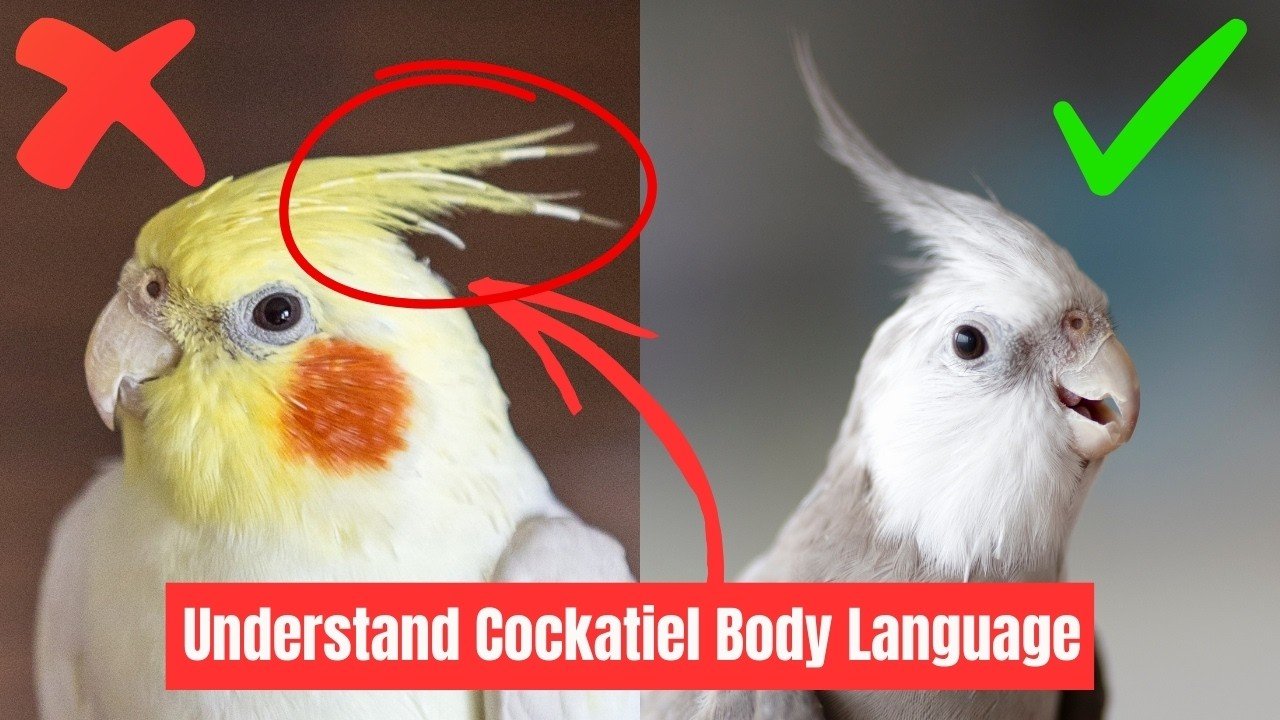
Body language decoder:
| Signal | Meaning | Action |
|---|---|---|
| Flat crest, leaning in | Curious, safe | Continue |
| Raised crest, backing away | Nervous | Slow down |
| Wings lifted, hissing | Threatened | Freeze, retreat |
| Beak grinding | Content | Reward |
Slow blinks from you signal calm. Never stare directly.
How Long Does It Take To Tame A Cockatiel?
| Profile | Step-Up Timeline |
|---|---|
| Hand-fed baby, calm home | 2 to 4 weeks |
| Young store-bought | 4 to 8 weeks |
| Adult fearful rescue | 2 to 6 months |
| Severely traumatized | 3 to 12 months |
Consensus Note: The Association of Avian Veterinarians, LafeberVet, and Dr. Irene Pepperberg’s parrot cognition research all confirm: fear extinction requires minimum 21 non-reinforced exposures. Plan sessions accordingly.
Progress follows the ladder:
- Tolerates sitting near cage.
- Eats from hand through bars.
- Steps onto hand inside cage.
- Steps onto hand outside cage.
- Flies to hand on cue.
10 minutes daily beats one hour weekly.
How Long Does It Take For A Cockatiel To Bond With You?
Taming is acceptance. Bonding is choice.
Bonding takes 3 to 6 months beyond taming. Signs:
- Whistles when you enter.
- Regurgitates toward you.
- Follows you room to room.
- Sleeps on your shoulder.
Keep showing up. Bonding compounds with daily play and voice interaction.
How To Get A Cockatiel To Trust You
Three pillars.
Voice: Talk softly every pass. Name the bird. Parrot vocal research shows voice discrimination within 10 to 14 days.
Food: Hand-feed daily. Never punish with food withdrawal.
Routine: Same times. Predictability kills fear.
| Treat Type | Motivation Level | Best For |
|---|---|---|
| Millet spray | Very High | Early trust building |
| Sunflower seed (small) | High | Training rewards |
| Finely diced carrot | Medium | Bonding sessions |
| Pellet crumb | Low | Maintenance only |
Respect space. Turning away is self-regulation.
How To Train A Cockatiel Effectively
Once rung 3 is stable.
Step-Up: Say “up.” Gentle pressure on lower chest. Reward instantly.
Target Training: Chopstick near beak. Touch = “target” + treat. Follows anywhere in days.
Recall: Call name across room. Any flight toward you gets heavy reward.
Positive reinforcement only. No yelling. No spray. No flick.
5 minutes, twice daily. End on success.


How To Play With Your Cockatiel To Strengthen Your Bond
Shreddable paper. Limited mirror (30 min max). Fetch with cork. Treat hide-and-seek.
Narrate: “You found it! Smart bird.”
Out-of-cage play reduces panic flights.
How To Pet A Cockatiel Correctly
Safe zones: head, cheeks, crest, neck nape.
Never: back, wings, belly. Triggers mating behavior.
Flat crest + leaning in = continue. Raised crest + backing = stop.
One finger stroke. Test daily.
How To Handle Bites And Aggression During Taming
Bite = “not ready.” Not malice.
Freeze. Wait release. Withdraw slow. No reaction.
No yelling. Confirms fear.
Drop one rung if frequent.
What If Your Cockatiel Regresses?
New pet, moved cage, noise, illness.
Reset protocol: Find trigger. Remove it. Drop one rung. Resume short sessions. Wait for bird to self-initiate twice.
Taming Methods Endorsed By Avian Veterinarians
This guide draws on 30 rescue cockatiels and the Association of Avian Veterinarians’ consensus. Get the step-by-step system that actually works.
How To Tame A Cockatiel That Bites
Glove for 3 to 5 sessions. Bite the glove. No consequence.
Switch to spoon feeding. Hand = food.
Transition to bare finger. Bite = back to spoon 48 hours.
Marked reduction in 3 to 6 weeks. Severe cases need longer.
What Not To Do When Taming A Cockatiel
| Mistake | Damage |
|---|---|
| Grab | Prey panic, trust erased |
| Yell | Confirms fear |
| Force out | Injury risk |
| Wing clip during taming | Learned helplessness |
| Ignore then smother | Unpredictable threat |
Keep bird flighted during taming. A clipped bird cannot retreat. Helplessness is not trust.
Can Cockatiels Be Fully Tamed At Any Age?
Yes. Adults learn. Timeline doubles.
Respect the ceiling. Some stay at rung 3 or 4. That is success.
Tips For Successfully Taming Your Cockatiel
Weekly Checklist:
| Day | 10 Min Session | Rung Check | Notes |
|---|---|---|---|
| Monday | Hand-feed | Rung 2 | Ate eagerly |
| Tuesday | Sit near | Rung 1 | No flinch |
| … | … | … | … |
Quiet corner first two weeks. Daily journal. Celebrate small wins. Stay positive.
Resources: Unsalted millet, natural wood perch. Our starter kits include taming journal.
Download Your Free Weekly Taming Progress Tracker
Never lose momentum. Use the printable Comfort Zone Ladder journal to record daily 10-minute sessions, rung milestones, and regression triggers.
Frequently Asked Questions About How To Tame A Cockatiel
What Is The Best Method For How To Tame A Cockatiel?
Hand-feeding plus Comfort Zone Ladder plus daily positive reinforcement. Never force.
How Long Does It Take To Tame A Cockatiel And See Results?
2 to 8 weeks for first results. 3 to 6 months for bonding. Severe cases 6 to 12 months.