


Alexandrine Parakeet For Sale
This Alexandrine Parakeet For Sale is a hand-raised, DNA-sexed baby Alexandrine prepared for a committed companion home. Alexandrines are the largest of the Asiatic parakeets, with a deep red beak, long tail, steady personality, and strong talking potential.
In the aviary, Alexandrine babies often show their confidence before they are fully independent. They step forward to inspect hands, chew wood with purpose, and learn best when handling is calm, short, and repeated daily.
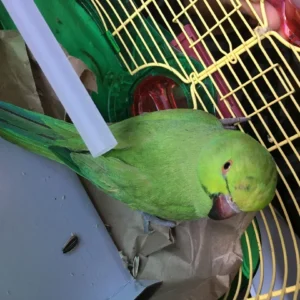
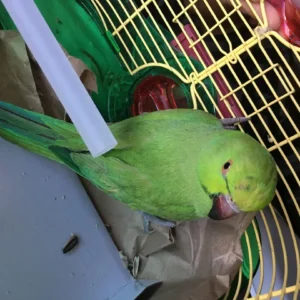
The bird shown in the image has the classic green plumage, pale eye ring, large red beak, and maroon shoulder patch that buyers look for in a healthy green Alexandrine. Young birds and females may not show the adult male neck ring, while males usually develop a black and rose collar around 18 to 36 months.
Your Alexandrine Parakeet For Sale leaves All Wings Aviary fully weaned, eating independently, and supported by clear care guidance. We focus on health, socialization, safe shipping, and honest buyer education before the bird ever leaves our care.
What Buyers Should Know Before Purchasing
The Alexandrine parakeet is a long-term companion, not a casual starter bird. A well-socialized Alexandrine can be affectionate, observant, and talkative, but it still needs daily interaction, safe chewing outlets, and patient training.
Most buyers ask about price, age, talking ability, cage size, and shipping before they reserve a bird. This Alexandrine Parakeet For Sale is currently listed at $2,000, which fits the typical U.S. range for a standard green, hand-raised baby.
Alexandrines are often calmer than Indian Ringnecks, but they are still intelligent parrots with strong opinions. During adolescence, some may test boundaries, become more vocal, or prefer one person unless the whole family handles the bird correctly.
A good buyer should be ready for 25 to 30+ years of care, a large cage, daily out-of-cage time, and an avian vet relationship. If you want a quiet bird that can sit alone all day, this is not the right species.
Temperament And Daily Handling
A hand raised Alexandrine parakeet is usually curious, loyal, and more settled than many smaller parakeets when handled correctly. They enjoy routine and often bond strongly with the people who feed, train, and calmly interact with them.
From breeder experience, the best Alexandrine homes avoid forcing affection during the first few days. Let the bird settle, offer treats by hand, practice step-up gently, and build trust before expecting cuddling or long handling sessions.
Daily handling should include short training, supervised play, chewing time, and social time with more than one family member. This reduces the chance of the bird becoming overly attached to only one person.
Talking Ability And Noise Level
A talking Alexandrine parakeet can learn words, whistles, and household sounds with repetition, but speech is never guaranteed. Their voice is typically deeper and more resonant than an Indian Ringneck’s voice.
Alexandrines can be vocal in the morning, evening, and when seeking attention. They are not usually as loud as many macaws or cockatoos, but they are not silent apartment pets.
For best results, repeat short phrases in the same tone each day. Birds often copy words connected to routine, such as greetings, step-up cues, food words, and family names.
Weaning Diet And Feeding Schedule
This Alexandrine Parakeet For Sale is placed only after it is fully weaned and eating independently. Weaning means the baby no longer depends on hand-feeding formula and can maintain weight on a normal parrot diet.
A healthy Alexandrine diet should include 60 to 70 percent quality pellets, fresh vegetables, limited fruit, and small portions of healthy seeds or nuts for training. Fresh water should be changed daily.
Avoid avocado, chocolate, caffeine, alcohol, onion, and salty human foods. Also avoid nonstick cookware fumes, smoke, scented candles, and aerosol sprays around any parrot.
Cage Size And Home Setup
Alexandrines need a large cage because much of their length comes from their long tail. A practical minimum cage size is about 36 inches wide, 24 inches deep, and 48 inches tall, with larger being better when bar spacing is safe.
Choose sturdy bars, secure latches, and bar spacing around 3/4 inch to 1 inch for most Alexandrines. Add natural perches of different widths, a sleeping perch, food stations, and space for toys without crowding the tail.
Provide bird-safe wood toys, foraging toys, shredding materials, and foot toys. Their beaks are powerful, and safe chewing helps prevent boredom and destructive behavior.
Health, Weaning, And Buyer Confidence
Before a baby leaves All Wings Aviary, we look for steady appetite, clean nares, bright eyes, strong grip, smooth feathering, normal droppings, and confident movement. Weight and behavior matter because parrots can hide signs of stress.
Each Alexandrine Parakeet For Sale is DNA-sexed so buyers know the bird’s sex before placement. This is especially important because juvenile Alexandrines usually look similar until males mature and develop the neck ring.
We recommend that every buyer schedule a wellness exam with an avian veterinarian after arrival. This gives you a baseline health record and helps your new bird start life in your home correctly.
Key Features And Benefits
• Hand-Raised Socialization – Helps your bird see people as trusted flock members
• DNA-Sexed Before Placement – Gives clear gender information before your bird arrives
• Fully Weaned Baby – Supports a safer transition because the bird eats independently
• Strong Talking Potential – Many Alexandrines learn clear words with repetition and routine
• Long-Term Companion – A 25 to 30+ year lifespan rewards steady care and bonding
• Classic Green Appearance – Shows the red beak and maroon shoulder patch buyers expect
• Calm Medium-Large Parrot Presence – Offers a large-bird feel without macaw-level intensity
Best Suited For
• Owners Wanting A Hand Raised Alexandrine Parakeet With Talking Potential
• Families Able To Supervise Children And Teach Respectful Bird Handling
• Buyers Ready For 2 To 4 Hours Of Daily Social Time
• Homes With Space For A Large Cage And Safe Out-Of-Cage Play
• Prepared First-Time Parrot Owners With Support From An Experienced Aviary
Who This Bird Is Not Best For
• Owners Wanting A Very Quiet Pet
• Homes That Cannot Provide Daily Interaction
• Buyers Without Space For A Large Cage
• People Who Cannot Tolerate Chewing, Food Mess, Or Vocal Periods
• Anyone Looking For A Short-Term Pet
Care And Usage Notes
• Give Your Bird A Quiet First 24 To 72 Hours So It Can Learn The New Room, Voices, And Feeding Routine
• Keep New Birds Separate From Existing Birds Until A Quarantine Period And Avian Vet Check Are Completed
• Offer Pellets, Vegetables, Clean Water, And Small Training Treats Instead Of An All-Seed Diet
• Rotate Toys Weekly To Encourage Chewing, Climbing, And Foraging
• Provide 10 To 12 Hours Of Dark, Quiet Sleep Each Night
• Use Only Bird-Safe Cleaners And Avoid PTFE, Teflon, Smoke, Scented Candles, And Aerosols
Buyer Readiness Checklist
• Cage Ready: Large cage with safe bar spacing, secure latches, and room for the tail
• Diet Ready: Pellets, fresh vegetables, clean water dishes, and healthy training treats
• Vet Ready: Access to an avian veterinarian for a post-arrival wellness exam
• Time Ready: Daily handling, training, and supervised out-of-cage time
• Safety Ready: No toxic fumes, unsafe plants, ceiling fans during flight, or loose household hazards
Technical Specifications
• Listing Price: $2,000
• Species: Alexandrine Parakeet
• Scientific Name: Psittacula eupatria
• Common Names: Alexandrine Parakeet, Alexandrine Parrot, Alexandrian Parrot
• Color Shown: Green With Red Beak, Pale Eye Ring, And Maroon Shoulder Patch
• Adult Length: 22 To 24 Inches
• Average Adult Weight: 200 To 300 Grams
• Expected Lifespan: 25 To 30+ Years
• Sexing: DNA-Sexed
• Weaning Status: Fully Weaned Before Release
• Talking Potential: Good, But Not Guaranteed
• Recommended Daily Interaction: 2 To 4 Hours
• Shipping: Weather-Permitting Nationwide Shipping Available
Why Buy From All Wings Aviary
• DNA-Sexed And Vet-Checked Birds With Clear Health Support
• Hand-Raised By Experienced Breeders Who Monitor Weaning, Weight, And Behavior
• Fully Weaned Before Placement To Protect The Bird And The Buyer
• Safe Nationwide Shipping In Airline-Approved Live Animal Travel Crates When Weather Allows
• Honest Guidance On Temperament, Cage Setup, Diet, And Long-Term Care
• Lifetime Support For New Owners Who Want Practical Help After Arrival
Frequently Asked Questions About Alexandrine Parakeet
How Much Does An Alexandrine Parakeet For Sale Cost
This Alexandrine Parakeet For Sale is currently listed at $2,000. Standard green, hand-raised Alexandrine babies commonly range from about $1,500 to $3,500, while rare color mutations can cost much more. Price can vary by age, sexing, weaning status, socialization, and breeder support.
Is This Alexandrine Parakeet Hand Raised And Fully Weaned
Yes, this Alexandrine parakeet is hand-raised, DNA-sexed, and fully weaned before placement. Fully weaned means the bird is eating independently and does not rely on hand-feeding formula. This is safer for buyers and healthier for the baby during the move to a new home.
Will An Alexandrine Parakeet Talk And Bond With My Family
Yes, many Alexandrine parakeets learn to talk and bond closely with their families, but speech is never guaranteed. They usually respond best to daily repetition, calm handling, and social time with multiple family members. Without regular interaction, they may become shy, loud, or overly attached to one person.
What Cage Size And Daily Time Does My Alexandrine Need
An Alexandrine needs a large cage of at least about 36 inches wide, 24 inches deep, and 48 inches tall. Bigger is better because the tail is long and can become damaged in cramped cages. Plan for 2 to 4 hours of daily supervised interaction, training, and enrichment.
Do You Offer A Health Guarantee And Safe Shipping
Yes, All Wings Aviary offers health support and safe, weather-permitting nationwide shipping. Birds are checked before travel and shipped in airline-approved live animal travel crates when conditions are appropriate. We also help buyers understand setup, feeding, arrival care, and the next steps after the bird comes home.



Reviews
There are no reviews yet.