


Baby African Grey Parrot For Sale
A Baby African Grey Parrot For Sale is one of the best choices for buyers looking for a highly intelligent companion bird with strong speech ability and deep social bonding. Congo African Greys are respected worldwide for their problem solving skills, emotional awareness, and ability to build routines with their owners.
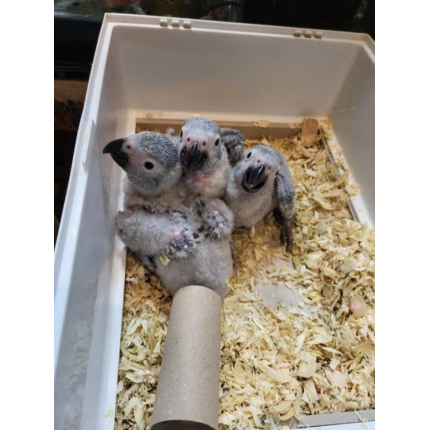
The baby parrots shown in the image are still developing feathers and are covered with soft grey down around the chest and neck. Their dark beaks, early wing feathering, and fluffy body condition show they are still young chicks requiring controlled warmth, scheduled feeding, and close monitoring during growth.
One thing experienced breeders notice early is how observant African Grey babies are compared to many other parrots. Young Greys often stay quiet while watching people carefully before becoming comfortable. Once trust builds, they usually begin stepping up willingly, leaning in for attention, and experimenting with whistles or simple sounds.
Buyers often ask if they should purchase an unweaned baby. In most homes, a fully weaned Baby African Grey Parrot is the safer option. Fully weaned babies are eating independently, maintaining healthy body weight, and adjusting more confidently to new environments.
African Grey parrots need more than a cage and food. They require mental stimulation, structured routines, healthy sleep schedules, and daily interaction. Without enrichment, intelligent parrots may develop boredom behaviors like feather chewing or excessive screaming.
At All Wings Aviary, we focus on responsible placement, social development, and honest communication about each bird. We discuss feeding habits, weaning progress, cage setup, travel preparation, and transition care before any bird leaves our aviary.
Why Buyers Choose African Grey Parrots
• Exceptional Talking Ability With Clear Word Pronunciation
• Highly Intelligent And Quick To Learn Household Routines
• Strong Long Term Bonding With Owners
• Medium To Large Parrot Size Suitable For Indoor Homes
• Excellent For Training, Foraging, And Interactive Play
What Buyers Usually Want To Know Before Purchasing
• Whether The Bird Is Fully Weaned
• If DNA Sexing Documentation Is Available
• How Socialized The Baby Is Around People
• What Foods The Bird Currently Eats
• Expected Lifespan And Daily Care Needs
• Shipping Safety And Travel Preparation
• Noise Level And Talking Potential
• Cage Size Recommendations
• Veterinary Records And Health Guarantee Details
Temperament And Personality
African Grey parrots are intelligent, sensitive, and routine oriented birds. Many babies begin quietly and become more affectionate as they settle into a consistent environment. Some Greys bond strongly with one person while others interact well with the entire family when socialized properly from a young age.
These parrots are not usually nonstop loud birds like some larger macaws, but they are extremely vocal learners. They commonly mimic phones, alarms, whistles, microwave sounds, and frequently heard words around the home.
Talking Ability And Intelligence
African Grey parrots are considered among the best talking parrots in the world. Many develop large vocabularies when spoken to consistently and rewarded through interaction. Their intelligence also means they need puzzle toys, climbing opportunities, and daily engagement to stay mentally healthy.
A bored African Grey often creates its own stimulation. Rotating toys, offering safe wood chews, and teaching simple commands help prevent behavioral problems.
Feeding And Nutrition
Baby African Grey parrots thrive on balanced nutrition during development. Most owners feed a high quality pellet diet combined with fresh vegetables, leafy greens, limited fruit, and healthy nuts in moderation.
Fresh water should always be available. Unsafe foods include avocado, chocolate, caffeine, alcohol, onion, and heavily salted snacks.
Cage Setup And Home Preparation
A proper cage setup should allow climbing, wing stretching, and multiple perch sizes for healthy feet. Stainless steel bowls and bird safe toys are strongly recommended.
African Greys also need:
• 10 To 12 Hours Of Sleep
• Daily Out Of Cage Exercise
• Safe Indoor Air Quality
• Consistent Daily Routine
• Mental Enrichment Activities
Avoid smoke, scented candles, aerosol sprays, and nonstick cookware fumes around parrots.
Key Features And Benefits
• Hand Fed Early Care Helps Build Human Trust
• Socialized Baby Development Encourages Confidence
• Strong Talking Potential With Daily Interaction
• Vet Checked Health Monitoring Before Placement
• Lifetime Breeder Support For New Owners
Best Suited For
• Families Ready For Long Term Bird Ownership
• Owners Wanting A Talking Companion Parrot
• Bird Lovers Able To Provide Daily Interaction
Care And Usage Notes
• Always Confirm Current Weaning Status Before Purchase
• Schedule An Avian Veterinary Visit Soon After Arrival
• Rotate Toys Weekly To Prevent Boredom
• Maintain Stable Household Temperatures
• Introduce New Foods Gradually During Transition
Technical Specifications
• Species: Congo African Grey Parrot
• Scientific Name: Psittacus erithacus
• Adult Weight: 400 To 500 Grams
• Adult Length: 12 To 14 Inches
• Lifespan: 40 To 60 Years
• Temperament: Intelligent, Sensitive, Social
• Talking Ability: Excellent
• Shipping: Available In The USA
Why Buy From All Wings Aviary
• Hand Raised Parrots With Daily Socialization
• Transparent Guidance About Weaning And Care
• Safe Nationwide Shipping Options Available
• Health Guarantee Information Provided Before Purchase
• Ongoing Support For Feeding And Adjustment Questions
• Focus On Responsible Bird Placement
Frequently Asked Questions About Baby African Grey Parrot
Is A Baby African Grey Parrot Good For Beginners
Yes, a Baby African Grey Parrot can be suitable for prepared beginners who are willing to learn proper parrot care. African Greys require patience, daily interaction, and long term commitment. First time owners should research diet, cage setup, and enrichment before bringing one home.
How Much Attention Does An African Grey Need Daily
African Grey parrots need several hours of daily social interaction and mental stimulation. These birds are highly intelligent and do not thrive when ignored for long periods. Training sessions, supervised play, and conversation help maintain healthy behavior.
Should I Buy A Fully Weaned African Grey Parrot
Yes, most homes should choose a fully weaned African Grey Parrot. Fully weaned babies are eating independently and usually transition more safely into new homes. Unweaned babies require advanced hand feeding experience and close monitoring.
What Is The Difference Between Congo And Timneh African Grey Parrots
Congo African Greys are larger with lighter grey feathers and bright red tails, while Timneh African Greys are smaller with darker plumage and maroon tails. Congo African Greys are often known for exceptional vocabulary development, while Timneh Greys are commonly considered slightly more adaptable to change.


Olivia Marie Chen (verified owner) –
We adopted Luna at 4 weeks, and she’s been nothing short of magical. AllWingsAviary doesn’t just hand over a bird—they hand over a relationship. Weekly check-ins, feeding support, and even advice on introducing her to our dog! She’s now mimicking coughs and loves her millet spray. Worth every penny.
Daniel Paul Henderson (verified owner) –
Solid experience. Our baby Gray, Echo, was 6 weeks old and just starting to wean. The breeder gave us a full diet plan and even recommended local avian vets. Took off one star because the website didn’t specify if the chick was DNA-sexed—but they confirmed it over email right away. Great bird, great care.
Emily Grace Thompson (verified owner) –
As a former vet tech, I’m extremely picky about where I get animals. AllWingsAviary exceeded expectations. Our chick, Wren, came with full health records, crop photos, and a feeding schedule tailored to her age. She’s now 8 weeks old, gaining weight beautifully, and starting to explore toys. Ethical, knowledgeable, and kind.
Brandon Thomas Lewis (verified owner) –
Chick is healthy and active, but arrived slightly underweight for his age (5 weeks). The breeder admitted they’d had a busy hatch and missed a feeding or two. They refunded $100 and sent extra formula—very accountable. He’s caught up now and full of personality. Just be prepared to step in if needed.
Michael Anthony Ruiz (verified owner) –
The bird is healthy and sweet—no complaints there. But communication slowed down right before pickup, and we had to reschedule twice. Once we met the breeder in person, everything was great. Just wish the logistics were smoother. Still, watching our little Zara thrive makes it worth it.
Sarah Jane Mitchell (verified owner) –
This is our third parrot, but our first African Grey—and AllWingsAviary made it feel like we’d done it a hundred times. Our 3-week-old, Atticus, came with a feeding syringe, formula sample, and even a tiny blanket that smelled like his brooder (to ease the transition). He’s calm, curious, and gaining weight like a champ.
Margaret Ellen (verified owner) –
At 72, I wanted one last intelligent companion—and little Winston (6 weeks old) is perfect. AllWingsAviary didn’t hesitate to work with a senior adopter. They even helped me set up a safe, low-stress brooder. He’s gentle, observant, and already nuzzles my finger. Joy I didn’t know I needed.
Jordan Tyler Williams (verified owner) –
We’ve raised cockatiels before, but never a parrot this intelligent. AllWingsAviary prepared us well. Our baby, Poe, arrived at 4 weeks with a detailed feeding log and temperament notes (“calm but curious”—spot on!). He’s now mimicking doorbells and loves head scratches. Couldn’t be happier.
Emma Louise Parker (verified owner) –
The chick is sweet and healthy, but arrived with slightly messy vent feathers (likely from a recent feeding). Cleaned up easily, and the breeder apologized and sent extra wipes. Just a small oversight—but shows even the best can have off moments. Our little Miso is now happy and thriving.
Jessica Lynn Morales (verified owner) –
We’re building a small educational aviary, and our baby Gray, Juno, will be our star. AllWingsAviary provided full documentation, parent health clearances, and even enrichment ideas for cognitive development. She’s alert, strong, and already solving simple puzzles at 7 weeks. Exceptional quality.
Robert James Wilson (verified owner) –
My wife and I retired early to focus on passions—and raising an African Grey is now ours. Our chick, Atlas, came at 5 weeks, fully on schedule. The breeder spent an hour with us reviewing care, diet, and behavior cues. He’s calm, curious, and already “talking” in chirps and whistles. Perfect start.
Kevin James Foster (verified owner) –
As a small-time breeder, I needed a high-quality chick to raise for my program. AllWingsAviary delivered. Our male Gray, Phoenix, came from health-tested parents, with clean feathers, bright eyes, and a strong feeding response. They even shared lineage info. Top-tier ethics and birds.
Jessica Lynn Morales (verified owner) –
Bird is adorable and healthy, but the pickup location was 45 minutes farther than listed on the site. Not a dealbreaker, but threw off our schedule. That said, our chick, Rio, is thriving—gaining weight, vocalizing, and already recognizing our voices. Would recommend with that small caveat.
Chloe Ann Rivera (verified owner) –
Our daughter has autism, and we hoped a baby parrot could be a calming presence. Our chick, Sage, is only 5 weeks old but already responds to soft voices and gentle touch. AllWingsAviary asked thoughtful questions about our home before approving the adoption. Truly cares where their birds go.
Sophia Grace (verified owner) –
Adopted our 3-week-old, Zuri, and she’s been a dream. Feeding is going smoothly, and she’s very responsive. AllWingsAviary sends weekly “milestone” emails (e.g., “Time to introduce soft toys!”). Only reason it’s not five stars: no option to video-call before pickup—but they sent plenty of photos.
Amanda Leigh (verified owner) –
We brought home our 4-week-old African Grey, Milo, last month, and he’s already the heart of our home. AllWingsAviary raised him with such care—he was healthy, well-fed, and calm from day one. They sent feeding logs, a starter kit, and even a video of him eating before we committed. Couldn’t have asked for a smoother transition!
William Edward Grant (verified owner) –
After losing our 20-year-old Congo Grey, we waited two years before opening our hearts again. Bringing home little Cosmo (5 weeks) felt like healing. AllWingsAviary included a feather from our old bird’s favorite toy (we’d mentioned him in our inquiry). That level of empathy? Unbelievable.
Taylor Renee Brooks (verified owner) –
First-time bird owner here! I was terrified of hand-feeding, but the team walked me through every step. My baby, Nova, arrived at 4 weeks and is now 7—eating pellets, playing with bells, and dozing on my shoulder. Only hiccup: the starter formula ran out faster than expected. Otherwise, flawless.
Jason Robert Kim (verified owner) –
Our baby Gray, Kofi, arrived alert and strong at 5 weeks old. Hand-feeding has been a bonding experience for our family. AllWingsAviary was responsive and sent detailed weaning timelines. Only reason for 4 stars: the travel crate was a bit snug, but he was perfectly fine. Would buy from them again.