


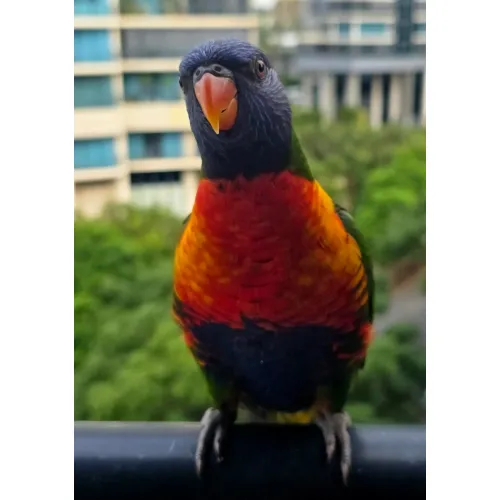
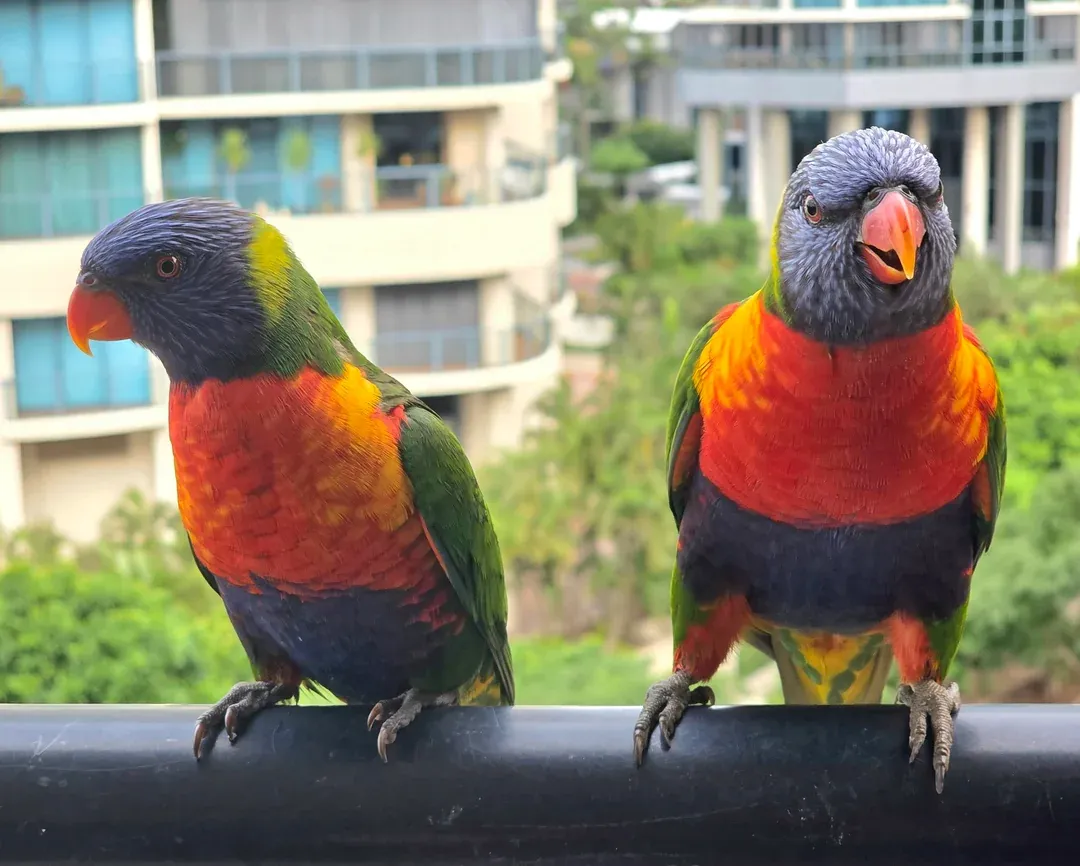
Lorikeet Parrots Talking Birds For Sale
A lorikeet parrot is one of the most colorful and interactive companion birds in the world. Our birds are hand-fed from three weeks, weaned onto a proper nectar and low-iron pellet diet, and socialized daily so they bond with their new owner within hours of arrival.
After raising lorikeets for over a decade, I can tell you something most listings leave out. A healthy lorikeet’s droppings are liquid and projectile, and their energy level is closer to a hummingbird on espresso than a typical parrot. That is exactly why we only place these birds with owners who understand the daily wipe-down routine and welcome it.
Picture a bird that hangs upside down from your finger, mimics your laugh, and races to greet you the second you walk in the door. Rainbow lorikeets are clowns with feathers, capable of learning simple words, ringing your doorbell back at you, and inventing games with bottle caps and toilet paper rolls. They stay playful well into adulthood.
Every lorikeet from All Wings Aviary leaves the aviary vet-checked, DNA-sexed on request, and backed by our 7-day live arrival and health guarantee. We ship safely nationwide through USDA-approved avian carriers and offer lifetime phone support so you never feel alone with your new bird.
Lorikeet Temperament And Personality
Lorikeets are bold, curious, and physically affectionate. They love climbing on shoulders, snuggling into hoodie pockets, and play-wrestling with fingers. They are also strongly territorial and should always be housed alone — never with other parrot species — because they will defend their cage with surprising force. Expect a bird that is loud in the morning and evening, quiet during midday naps, and constantly in motion when out of the cage.
What Lorikeets Eat – The Most Important Thing To Get Right
Lorikeets cannot eat a standard parrot seed mix. Their digestive system is built for liquid food, and the wrong diet will shorten their lives dramatically.
A correct daily diet includes:
- Fresh nectar mix (Higgins inTune, Lory Life, or Wombaroo) prepared twice daily
- Low-iron lorikeet pellets, kept under 100 ppm iron
- Small servings of safe fruit: apple, pear, melon, mango, grapes, fig
- Safe veggies: corn, carrot, sweet potato, broccoli, squash
- Fresh, clean water changed daily
Strictly avoid: seeds, citrus, strawberries, papaya, kiwi, raisins, avocado, chocolate, caffeine, and alcohol. High vitamin C foods boost iron absorption and trigger hemochromatosis (iron storage disease), the number one killer of pet lorikeets.
Lorikeet Cage And Housing Requirements
A single lorikeet needs a cage at least 36 inches long by 24 inches wide by 36 inches tall, with stainless steel bars spaced ½ inch apart. Because their droppings shoot outward, a splash guard or seed skirt is a must. Keep the cage in a high-traffic room, away from the kitchen, and never near Teflon-coated cookware or aerosols. Provide ropes, swings, foraging toys, and a shallow bath dish — lorikeets bathe almost every day.
Key Features And Benefits
- Hand-Fed From Three Weeks — Bonds quickly and trusts human handling
- Weaned Onto Nectar And Low-Iron Pellets — No diet transition stress at home
- DNA-Sexed On Request — Know exactly whether you are getting a male or female
- Vet-Checked With Health Certificate — Cleared of PBFD, polyomavirus, and chlamydia
- Socialized Daily With Children And Adults — Comfortable in busy households
- Backed By A 7-Day Live Arrival And Health Guarantee — Risk-free purchase
Best Suited For
- Intermediate bird owners ready for a high-energy companion
- Families with older children who can respect a small, beak-curious bird
- Owners who can dedicate 2 to 4 hours of daily interaction
- Homes with easy-to-clean flooring near the cage area
- People who want a small parrot with big-parrot personality
Care And Usage Notes
- Feed fresh nectar twice daily and discard within 4 hours to prevent yeast infections
- Never offer citrus, strawberries, or high-iron foods
- Provide a bath dish or daily misting — lorikeets groom better when bathed often
- Use a stainless steel cage at least 36″ L x 24″ W x 36″ H with ½ inch bar spacing
- Avoid Teflon cookware, scented candles, and aerosols in the same airspace
- Wash nectar dishes after every feeding to stop bacteria buildup
- Provide UV light exposure for 10 to 12 hours daily for vitamin D synthesis
Technical Specifications
- Species: Trichoglossus moluccanus (Rainbow Lorikeet)
- Adult Weight: 120 To 140 Grams
- Adult Length: 10 To 12 Inches
- Lifespan: 20 To 30 Years
- Diet Type: Nectarivore (Nectar, Pollen, Soft Fruit, Low-Iron Pellets)
- Talking Ability: Mild To Moderate (5 To 20 Words With Training)
- Noise Level: High (Chatter, Whistles, Mimicry Throughout The Day)
- Sexing: DNA Available On Request
- Shipping: USDA-Approved Avian Cargo, Nationwide USA
Common Lorikeet Subspecies We Breed
- Rainbow Lorikeet – The classic multicolor favorite, most outgoing
- Swainson’s Lorikeet – Bright green body with orange chest, very vocal
- Red-Collared Lorikeet – Bold red collar, slightly calmer temperament
- Musk Lorikeet – Smaller, green and red, quieter than its cousins
Why Buy From All Wings Aviary
- Every lorikeet is DNA-sexed, vet-checked, and issued a written health certificate
- Hand-raised in our home aviary by breeders with 15+ years of nectivore experience
- Safe nationwide shipping with climate-controlled avian carriers and live arrival guarantee
- Lifetime phone and email support on diet, training, and behavior for every buyer
- Transparent pricing — no hidden fees, no surprise crate or paperwork costs
Frequently Asked Questions About Lorikeet Parrots Talking Birds For Sale
Is This Lorikeet Parrot Safe For Beginners
Lorikeets are best suited for intermediate owners, not absolute beginners. Their nectar-based diet, liquid droppings, and high energy demand a committed owner who can handle daily cleaning and 2 to 4 hours of interaction. First-time bird owners often do better starting with a cockatiel or budgie.
Can Lorikeet Parrots Really Talk
Yes, lorikeets can talk, but in a high-pitched, slightly raspy voice. Most hand-raised lorikeets learn between 5 and 20 words or short phrases such as “hello,” “step up,” and “pretty bird.” They are stronger at mimicking whistles, doorbells, and laughter than at long sentences.
How Long Does A Lorikeet Live As A Pet
A well-cared-for pet lorikeet lives 20 to 30 years on average. Lifespan depends heavily on diet — birds fed seeds or high-iron fruits often die early from iron storage disease (hemochromatosis), while those on a proper nectar and low-iron pellet diet thrive for decades.
How Do I Care For And Clean Up After A Lorikeet
Plan on quick daily clean-ups because lorikeet droppings are liquid and shoot a short distance from the cage. Place easy-wipe flooring or a splash guard around the cage, change paper liners daily, wash nectar dishes after every meal, and disinfect the cage weekly with a bird-safe cleaner.
Do You Offer A Health Guarantee And Safe Shipping For Lorikeets
Yes, every lorikeet comes with a 7-day live arrival and health guarantee plus a vet-issued health certificate. We ship nationwide across the USA using USDA-approved avian cargo such as Delta and American, in climate-controlled IATA-compliant carriers, with full tracking from door to door.



Reviews
There are no reviews yet.